
Backpacking Sri Lanka: Budget Routes, Trains and Stays
Backpacking Sri Lanka is easy to do on a budget with trains, buses, guesthouses and local food. Use this guide to plan a practical route.
8 min read
Part of our guide: Sri Lanka itinerary: 7, 10, 14 & 21 day routes
Backpacking Sri Lanka works well on a budget if you lean on trains, long-distance buses, simple guesthouses and local food. The easiest way to keep costs down is to plan a loose route, travel overland where it makes sense, and avoid private transfers unless you really need them.
Sri Lanka rewards slow, practical travel. Distances can look short on a map, but road and rail journeys often take longer than expected because of hills, traffic and slower local services. For backpacking Sri Lanka, that means building a route around transport links rather than trying to cover every major place in one rush.
Key takeaways
- Use trains and buses as the backbone of your route.
- Build around Colombo, Kandy, Ella and the South Coast for an easy first trip.
- Guesthouses and homestays are often the best value for budget travellers.
- Local food keeps costs down and is usually the most satisfying option.
- Leave buffer time for delays, especially on scenic or popular routes.
A simple backpacking Sri Lanka route
A good budget route follows the main rail and bus corridors and adds a few side trips where transport is easy.
A classic backpack route often looks like this:
- Colombo or Negombo, for arrival and first-night logistics
- Kandy, for culture and onward rail links
- Ella or Haputale, for hill-country scenery and train travel
- Yala area or Tangalle, if you want the South Coast and access to wildlife areas
- Mirissa, Galle or Hikkaduwa, for beaches and easy bus connections
- Return to Colombo, or continue north or east if your time allows
If you only have two weeks, a backpacking Sri Lanka route usually works best when you choose one main loop rather than trying to see the whole island. A practical version is Colombo, Kandy, Ella, the South Coast, then back to Colombo. That keeps travel manageable and gives you a mix of city, hill country and coast.
If you want a more structured plan, think in travel days rather than attractions. Spend longer in places with good day trips and easy local transport, then use overnight stops where journeys are longer. For example, if you land at night in Colombo you can rest near the airport, catch an early train to Kandy the next morning, and still have a full day there.
For a fuller route idea, see our Sri Lanka itinerary guide, which helps you match your pace to the time you have.
Trains and buses are the budget backbone
Trains and buses are the cheapest way to move around Sri Lanka, and they are usually the best option for backpackers who are flexible.
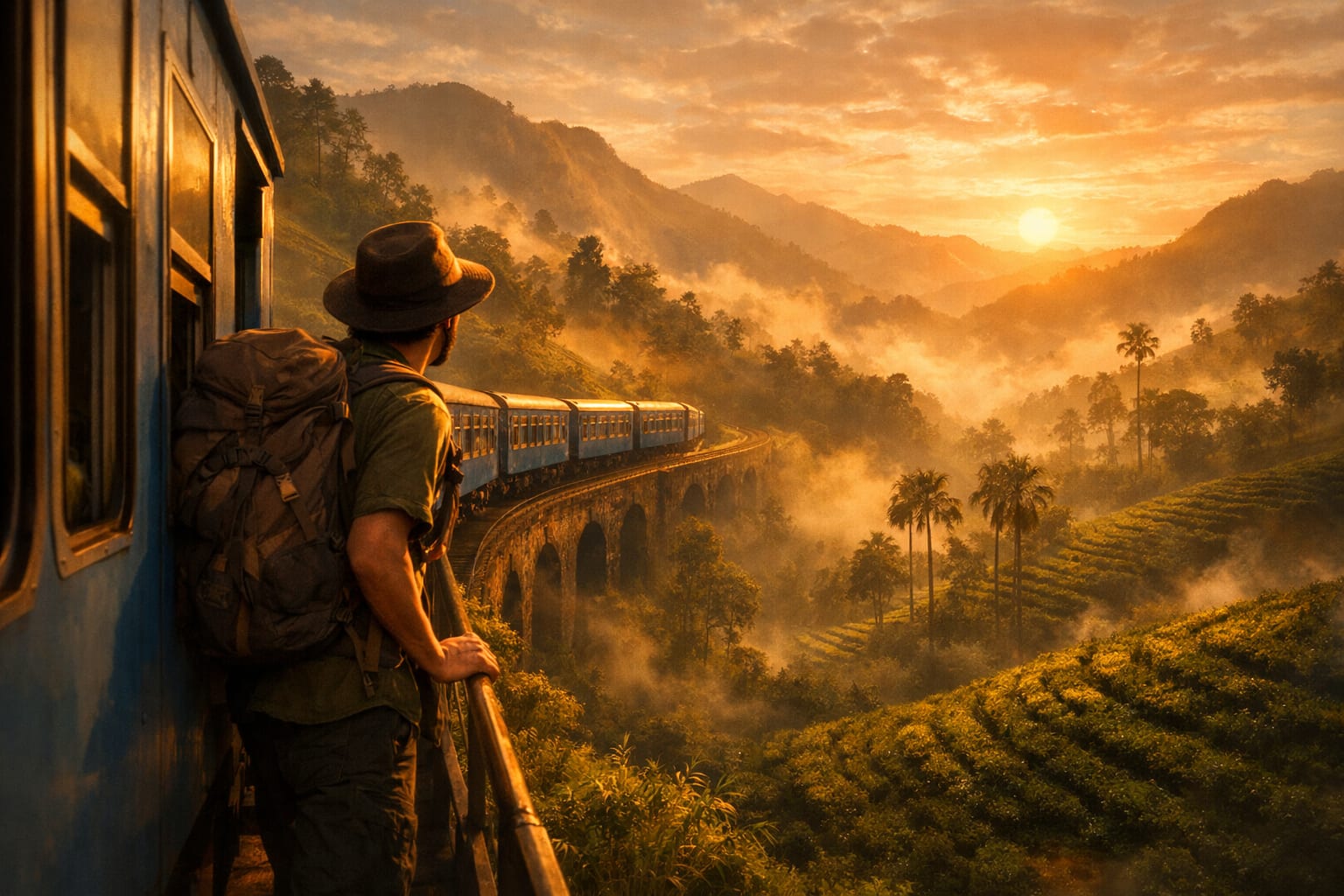
The train network is especially useful on scenic routes such as Colombo to Kandy and into the hill country. Train travel can be slower than road transport, but it is often more comfortable, more atmospheric and easier on your budget. Seat classes, reservation rules and availability vary by route, so check the official railway or booking source before you travel.
Buses are the most widespread transport option. They reach more places than trains, including many towns and beaches that do not have rail access. There are two broad types:
- Ordinary local buses, which are usually the cheapest
- Private buses, which can be slightly more comfortable on some routes
For budget travellers, the main trade-off is comfort versus cost. Local buses are cheaper but can be crowded, noisy and less predictable. If you are carrying a large backpack, keep it close and be ready for limited luggage space.
A few practical tips:
- Travel earlier in the day when possible, especially on popular routes
- Keep cash ready for fares, as card payment is not always available
- Check whether a train reservation is needed for the route you want
- Allow buffer time between connections, because delays happen
If you are deciding between rail and road, our Sri Lanka private driver vs train guide can help you choose the cheaper or easier option for each leg.
Where to stay on a backpacker budget
Guesthouses and small family-run stays are often the best value for backpacking Sri Lanka, especially outside the busiest tourist areas.
Hostels exist in some larger destinations, but guesthouses are more common across the country. They often offer private rooms rather than dorms, which can still be budget-friendly when split between two people. In smaller towns you may also find homestays or simple rooms above family homes.
When comparing places to stay, look at:
- Whether breakfast is included
- How close it is to the bus stand or train station
- Whether hot water, air conditioning or a fan is included
- If there is luggage storage for early arrivals or late departures
To save money, it often helps to stay near transport hubs rather than paying more for a remote beach location. That can also reduce tuk-tuk costs. In hill-country towns like Ella or Nuwara Eliya, walking distance to the centre can make a noticeable difference to your daily spend.
If you are booking at short notice, compare a few options and check whether the rate changes by season, room type or occupancy. Prices in Sri Lanka can move with demand, especially in peak travel periods.
What to eat on a budget
Local food is one of the easiest ways to keep your trip affordable, and it is also the simplest way to eat well in Sri Lanka.
A budget-friendly food day usually includes rice and curry, roti, hoppers, kottu, dhal, vegetable dishes and fruit. Small local eateries are often much cheaper than tourist-focused cafés, and they usually serve generous portions.
To save money on food:
- Eat where locals eat, especially at lunch
- Choose set meals when they are available
- Buy fruit and snacks from small shops or markets
- Carry a reusable water bottle and refill where safe and appropriate
Be mindful that spicy food is common. If you are sensitive to chilli, ask for milder dishes. If you have dietary restrictions, it is worth learning a few basic phrases or showing them written down.
How to save money without making the trip harder
The best budget strategy is to cut the costs that do not improve your trip, not the ones that make travel easier.
Good ways to save include:
- Use trains for scenic medium-distance routes
- Use buses for longer point-to-point travel where there is no train
- Stay in guesthouses near stations or bus stands
- Eat local meals instead of imported food
- Group activities by area so you do not backtrack unnecessarily
- Avoid too many short tuk-tuk rides by planning walks where practical
Things that can quietly increase your budget:
- Last-minute private taxis
- Staying in one place just because it is popular, not because it fits your route
- Repeated ATM withdrawals, if your bank charges per transaction
- Booking the same journey twice because you did not leave enough transfer time
If you are building a backpacking Sri Lanka trip on a budget, the cheapest trip is usually the one with fewer moves and fewer long detours.
Where Colombo, Kandy, Ella and the South Coast fit in
These four places make a strong backbone for backpacking Sri Lanka because they connect well and give you a good mix of experiences.
Colombo
Colombo is the easiest arrival point for many travellers and a practical place to sort out your first night, cash and onward transport. It is worth a short stop if you want a city base, but most backpackers use it as a gateway rather than a long stay. If you need local area and transport advice, our Colombo travel guide is a useful starting point.
Kandy
Kandy is one of the best inland bases for culture, lake views and onward rail travel. It also links neatly with the hill country, which makes it a natural stop on a budget route. If you are planning a temple visit, dress modestly and follow local customs carefully. You can also read our Kandy travel guide for a deeper look at the city.
Ella
Ella is a favourite with backpackers because the scenery is beautiful and the train journey is part of the experience. It is popular, so room prices can be higher than in less visited towns, but it still works well if you book sensibly and stay a little away from the busiest spots. For hikes, tea country and rail advice, see our Ella travel guide.
South Coast
The South Coast is where many backpackers slow down, recover from travel and spend time on beaches. Mirissa, Galle, Weligama, Tangalle and Hiriketiya each offer a different feel, so you can choose between surf, history, quieter beaches or a more social base. If you want a broader route that combines hills and coast, our 7 day Sri Lanka itinerary is a good companion read.
Budget planning by region
Different parts of Sri Lanka suit different backpacking styles, so it helps to plan costs region by region.
Colombo and Negombo are useful for arrivals, but they can be more expensive than inland towns if you choose tourist-heavy areas. Kandy is a strong base for culture and onward travel. Ella is popular with backpackers, but its popularity can push up room prices, especially in peak season. The South Coast offers a wide range of stays, from simple guesthouses to more expensive beach accommodation, so comparison shopping matters.
If you want to keep things lean, use bigger towns as transport hubs and smaller places as short stops. That gives you flexibility without paying premium rates in every destination.
A practical way to think about it is:
- Use Colombo for arrival and departure.
- Use Kandy for a central cultural stop.
- Use Ella for the hill country.
- Use the South Coast for slower beach time.
That structure keeps backpacking Sri Lanka simple without making the trip feel rushed.
Responsible backpacking in Sri Lanka
Backpacking Sri Lanka responsibly means choosing transport, wildlife experiences and cultural sites with care.
At temples and other religious sites, dress modestly, cover shoulders and knees, and remove shoes where required. Do not pose disrespectfully with Buddha images, and follow local rules about photography. Sri Lanka has Buddhist, Hindu, Muslim and Christian places of worship, and it is best to observe each site’s customs quietly and respectfully.
For wildlife, choose ethical experiences that do not involve captive-animal shows or elephant rides. If you visit national parks or reserves, use licensed operators, keep a respectful distance and do not pressure drivers to chase animals. The Department of Wildlife Conservation is the official source for protected areas and wildlife guidance.
If elephants are on your list, read our guide to seeing elephants in Sri Lanka responsibly before you book anything.
Useful official checks before you go
A budget trip can still go wrong if you skip the official basics.
Before travelling, check the official ETA website for visa rules that may differ by nationality, and confirm entry requirements through the Department of Immigration and Emigration. For current travel guidance, the Sri Lanka Tourism Development Authority and the official tourism site are useful starting points, especially if you are checking transport or destination updates.
If you are still in the planning stage, our free Sri Lanka travel starter kit can help you organise the basics without paying for a packaged tour.
Next step
Get the free starter kit and use it to shape your backpacking Sri Lanka route, budget and transport plan.
Facts in this guide were checked against official sources on the date shown. Rules and prices change, so confirm before you travel.
Frequently asked questions
What is the best backpacking Sri Lanka route on a budget?
A practical budget route is Colombo or Negombo, Kandy, Ella or Haputale, then the South Coast such as Mirissa, Galle or Hikkaduwa, before returning to Colombo. It follows the main rail and bus links and reduces expensive backtracking.
Are trains or buses better for backpacking Sri Lanka?
Trains are usually best for scenic routes and some medium-distance journeys, while buses are the most widespread and cheapest option for reaching many towns. Backpackers often use both, depending on the route and comfort needed.
Can you backpack Sri Lanka on a small budget?
Yes, if you stay in guesthouses, eat local food, use buses and trains, and avoid unnecessary private transfers. Costs vary by season, route and room type, so check current prices before booking.
Is Sri Lanka good for first-time backpackers?
Yes, Sri Lanka is a strong choice for first-time backpackers because it has straightforward transport links, plenty of guesthouses and a mix of city, hill country and coast. It helps to plan around Colombo, Kandy, Ella and the South Coast so the trip feels manageable.
How many days do you need for backpacking Sri Lanka?
Two weeks is a comfortable amount of time for a first backpacking trip, especially if you want a mix of culture, hills and beaches. You can do it in less time, but a slower pace usually works better because journeys can take longer than they look on the map.