
Where to see elephants in Sri Lanka: responsible wildlife guide
Find the best national parks for wild elephant sightings, learn the right seasons, and get ethical safari guidance for a respectful Sri Lanka wildlife experience.
6 min read
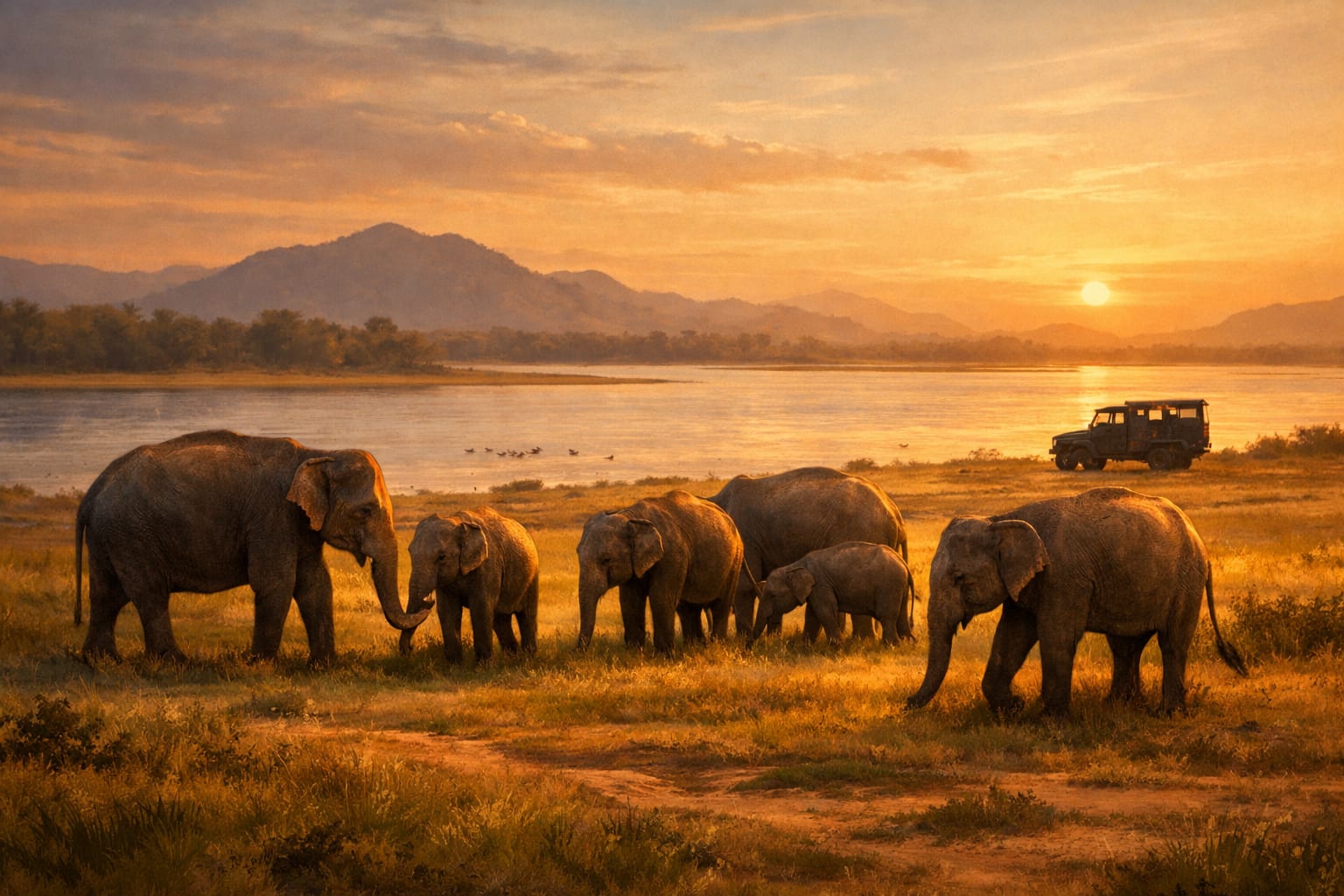
The answer to where to see elephants in Sri Lanka is to visit the country’s national parks and protected reserves where wild herds roam freely and can be observed from a respectful distance. Choosing the right park depends on the season, the landscape you prefer, and how much you value responsible wildlife viewing over convenience.
Key takeaways
- Udawalawe offers reliable year‑round sightings on open grassland.
- Minneriya and Kaudulla are famous for large dry‑season gatherings near reservoirs.
- Gal Oya and Wasgamuwa provide quieter alternatives away from the main tourist circuit.
- Always book a licensed safari operator who follows park rules and keeps a safe distance.
- Avoid any experience that offers rides, bathing or performances with captive elephants.
When is the best time to see elephants in Sri Lanka?
The best time to see elephants in Sri Lanka varies by region because water availability drives herd movements. In the dry zone, the months from May to September usually concentrate animals around permanent tanks and reservoirs, making sightings more predictable. In the wetter months, herds disperse across larger forested areas, which can reduce visibility but also lowers vehicle numbers. Planning your visit around the dry season of the specific park you choose will increase your chances of a good encounter.
Dry‑season patterns in the Cultural Triangle
Minneriya and Kaudulla sit in the Cultural Triangle where the north‑east monsoon brings a pronounced dry period. During these months, elephants gather in large numbers around the Minneriya tank and the Kaudulla reservoir, creating the well‑known “gathering” spectacle. If your itinerary includes Sigiriya or Dambulla, aligning your safari with this window is practical. For up‑to‑date park conditions, check the Department of Wildlife Conservation website.
Year‑round reliability in the south‑central zone
Udawalawe lies in a separate dry zone that experiences a less extreme seasonal swing. Its open savannah‑like terrain and the Udawalawe reservoir attract elephants throughout the year, making it a dependable choice for travellers with limited flexibility. The park’s relatively flat landscape also means wildlife is easier to spot from the vehicle.
Which national parks offer the most reliable elephant sightings?
Several parks stand out for consistent wild elephant encounters, each with a distinct character. Selecting one depends on your route, the time of year, and whether you prefer a busy, well‑known setting or a quieter experience.
Udawalawe National Park
Udawalawe is often recommended as the most practical park for a first elephant safari. The open grassland and scattered scrub make animals visible at a distance, and the park’s network of tracks allows guides to position vehicles without crowding. A typical half‑day safari starts early in the morning or late afternoon when elephants are most active. For a detailed park guide, see the Udawalawe National Park guide.
Minneriya National Park
Minneriya is renowned for the seasonal gathering where dozens, sometimes hundreds, of elephants converge on the receding shoreline of the ancient tank. The spectacle peaks between June and September. Because the park attracts many vehicles during peak weeks, choosing an operator who respects the park’s speed limits and viewing distances is essential. The nearby Sigiriya rock fortress makes it easy to combine culture and wildlife in a single day.
Kaudulla National Park
Kaudulla shares the same elephant corridor as Minneriya and often hosts herds when water levels shift. It tends to be less crowded, offering a more relaxed safari atmosphere. The park’s centrepiece is the Kaudulla reservoir, surrounded by grassland and forest patches that support a variety of other wildlife such as sambar deer and water birds.
Gal Oya National Park
Gal Oya lies further east and is centred on the Senanayake Samudraya reservoir. Its landscape mixes open water, islands and forested hills, providing a different backdrop for elephant viewing. Boat safaris are available here, allowing a low‑impact perspective from the water. This park suits travellers who are already exploring the east coast or the Arugam Bay area.
Wasgamuwa National Park
Wasgamuwa sits between the Cultural Triangle and the central highlands. It receives fewer visitors, so encounters feel more private. The park’s riverine forests and grasslands support healthy elephant populations, especially during the dry months when the Mahaweli River recedes.
How to see elephants responsibly on safari
Responsible elephant viewing starts with the choices you make before you enter a park. The following checklist helps ensure your safari supports conservation and animal welfare.
- Book a licensed operator registered with the Department of Wildlife Conservation.
- Confirm the vehicle stays on designated tracks and never drives off‑road to chase animals.
- Ask the guide to keep a minimum distance of 25 metres from any elephant, increasing space if the animal shows signs of stress such as ear flapping or trunk raising.
- Remain inside the vehicle at all times unless the guide explicitly says it is safe to step out at a designated viewpoint.
- Keep noise to a minimum; avoid music, loud conversation or sudden movements.
- Never feed, touch or attempt to interact with elephants.
- Choose a morning or late‑afternoon slot when temperatures are lower and elephants are naturally active.
- Support operators who contribute a portion of fees to park conservation programmes.
If you are also visiting cultural sites on the same trip, remember to dress modestly at temples, remove shoes where required, and never pose with Buddha images in a disrespectful manner. Respect for wildlife and respect for local customs go hand in hand.
Why you should avoid elephant rides and captive shows
Elephant rides, bathing sessions and stage performances rely on training methods that compromise animal welfare and often involve hidden cruelty. These activities keep elephants in confined conditions, restrict natural behaviours such as foraging and socialising, and can cause long‑term physical and psychological harm. By contrast, a wild‑elephant safari in a national park lets the animals move freely, choose their own associations, and remain in their native habitat. Spending your money on protected‑area tourism directly funds park management, anti‑poaching patrols and community livelihood programmes. When evaluating any elephant experience, ask three questions: does the elephant live in a natural range? can it walk away from people at any moment? is the setting a protected reserve rather than a performance venue? If the answer to any of these is no, choose a different activity.
Planning tips for where to see elephants in Sri Lanka
A smooth elephant‑focused trip matches your travel dates, route and comfort level with the right park and operator. Use the following practical steps when building your itinerary.
- Decide which region you will be in during the dry season of that park.
- Reserve a safari with a reputable operator at least two weeks in advance for peak months.
- Pack lightweight, neutral‑coloured clothing, a wide‑brim hat, sunscreen and a reusable water bottle.
- Bring a pair of binoculars (8×42 or 10×42) for distant viewing without disturbing the herd.
- Check the latest park entry fees and permit rules on the Department of Wildlife Conservation site before departure.
- Allow flexibility in your schedule; a sudden rain shower can shift elephant movements and improve sightings later in the day.
- If travelling with children, select a park with shorter drive times (Udawalawe is often the easiest) and brief the guide on any special needs.
- Combine your safari with nearby cultural highlights such as Sigiriya, Dambulla or the Temple of the Tooth in Kandy to maximise your time in the Cultural Triangle. For a ready‑made route, the 7‑day Sri Lanka itinerary covering culture, hills and coast includes a Udawalawe safari option.
A soft reminder: the free Come To Sri Lanka travel starter kit can help you organise routes, seasonal advice and packing lists without guesswork.
Next step
Get the free Sri Lanka travel starter kit to plan your wildlife adventure with confidence: /newsletter/.
Facts in this guide were checked against official sources on the date shown. Rules and prices change, so confirm before you travel.
Frequently asked questions
Where is the best place to see elephants in Sri Lanka?
Udawalawe National Park is the most reliable year‑round option, while Minneriya and Kaudulla are famous for large dry‑season gatherings in the Cultural Triangle.
Where can I see elephants in Sri Lanka without supporting cruelty?
Choose national parks such as Udawalawe, Minneriya, Kaudulla, Wasgamuwa or Gal Oya and book a licensed safari that keeps a respectful distance; avoid rides, bathing and captive shows.
What is the best season to see elephants in Sri Lanka?
The dry months from May to September concentrate herds around water in the north and east, but Udawalawe offers good sightings throughout the year.
How do I book a responsible elephant safari in Sri Lanka?
Use a licensed operator registered with the Department of Wildlife Conservation, confirm they follow park tracks and distance rules, and prefer early‑morning or late‑afternoon slots.
Can I combine an elephant safari with cultural sites in one trip?
Yes, the Cultural Triangle (Sigiriya, Dambulla, Polonnaruwa) sits near Minneriya and Kaudulla, making it easy to pair a morning safari with afternoon temple visits.