Sigiriya: complete guide to Sri Lanka's iconic rock fortress
This guide helps you plan a trip to Sigiriya, the fifth-century rock citadel at the heart of Sri Lanka's cultural triangle. You will learn when to visit, how to reach the site, what to see beyond the main climb, and which areas make convenient bases for exploring the region.
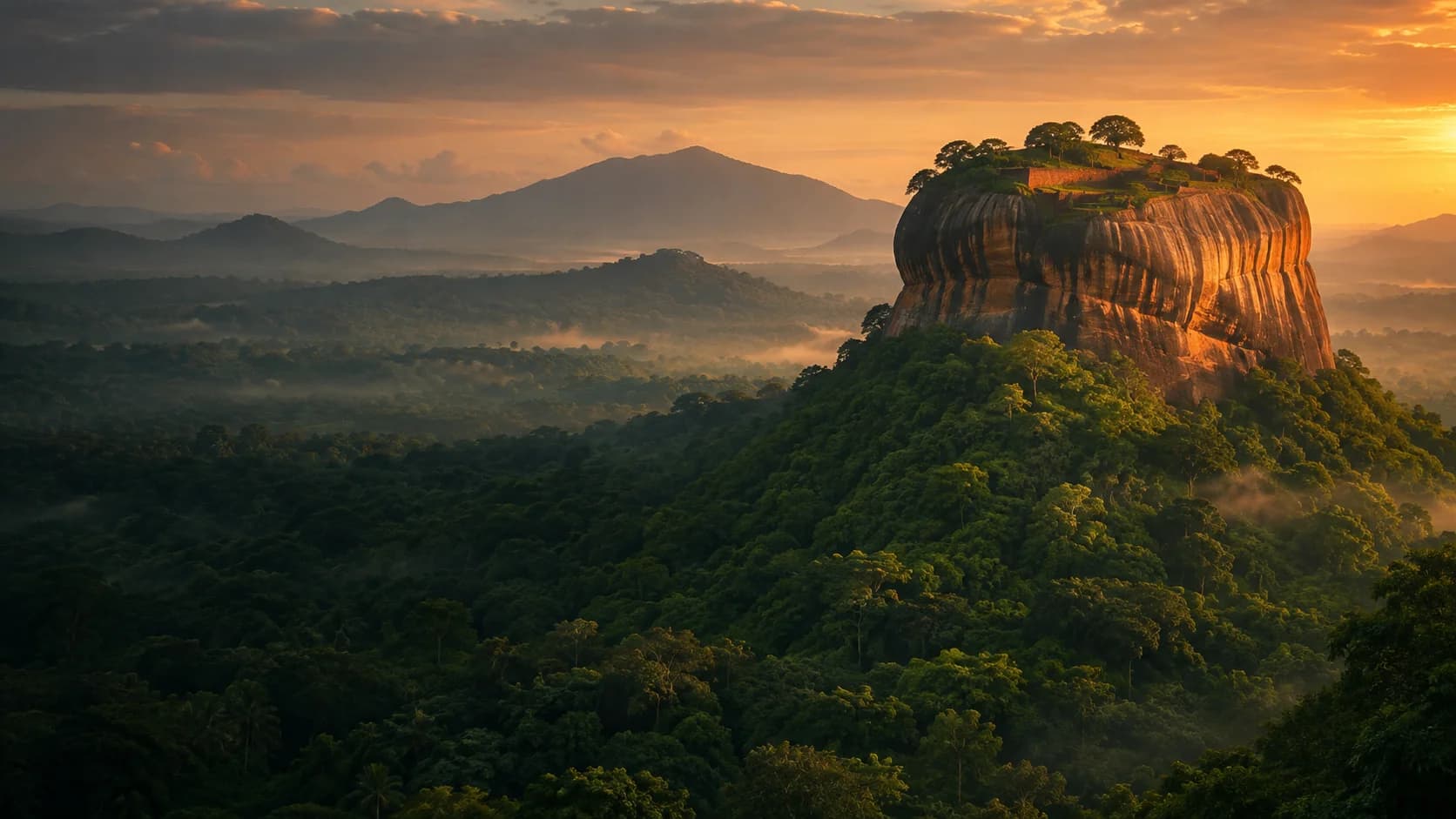
Sigiriya is a UNESCO World Heritage site centred on a 200-metre granite monolith that rises from the central plains. The summit holds the ruins of King Kashyapa's palace complex, while the mid-level frescoes and mirror wall are among the island's most celebrated ancient artworks. The surrounding water gardens and boulder gardens demonstrate sophisticated hydraulic engineering. Most visitors combine Sigiriya with the nearby Dambulla cave temples and the ancient cities of Anuradhapura and Polonnaruwa.
Why go
Sigiriya offers one of South Asia's most dramatic archaeological landscapes in a compact area that can be explored in a day or two. The climb rewards you with panoramic views over forest and reservoir, and the frescoes provide a rare glimpse of classical Sinhalese painting. The site sits within easy reach of three other UNESCO sites, making it a natural hub for a cultural triangle itinerary. Wildlife enthusiasts can also access Minneriya and Kaudulla national parks for elephant gatherings without long transfers.
When to go
The most reliable weather falls between December and April when the north-east monsoon has ended and the south-west monsoon has not yet begun. Daytime temperatures typically sit in the high 20s to low 30s Celsius with lower humidity. May to September brings the south-west monsoon; rain is possible but often comes in short bursts and crowds are thinner. October and November see the inter-monsoon period with unpredictable showers. The site opens daily from early morning until late afternoon; exact hours vary by season so check the Sri Lanka Tourism Promotion Bureau site before you travel.
How to get there
Sigiriya lies roughly 170 kilometres north-east of Colombo. The most direct route by road follows the A6 and A9 highways, taking four to five hours from the capital or Bandaranaike International Airport depending on traffic. Private car with driver is the common choice for visitors on a multi-stop itinerary. Public buses run from Colombo's Pettah station to Dambulla (about five hours) where you change for a local bus or tuk-tuk to Sigiriya (20 minutes). The nearest railway station is Habarana, 15 kilometres away, served by the Colombo, Batticaloa line; from there a taxi or tuk-tuk completes the journey. Domestic flights by Cinnamon Air land at Sigiriya's small airfield from Colombo, cutting travel time to 30 minutes but at a significantly higher cost. Visa requirements depend on nationality; most travellers need an Electronic Travel Authorization obtained via the official ETA website before arrival.
Getting around
The core archaeological zone is walkable from the main entrance, though the climb to the summit involves 1,200 steps and can take 60 to 90 minutes each way. Tuk-tuks wait at the entrance and can shuttle you to the Dambulla cave temples (20 kilometres) or to park entrances for Minneriya and Kaudulla (30 to 40 kilometres). Many visitors hire a bicycle from guesthouses to ride the flat back-roads between Sigiriya village, the museum and the royal gardens. If you plan multiple park visits or day trips to Anuradhapura and Polonnaruwa, keeping a car and driver for the duration is the most efficient option.
Things to do
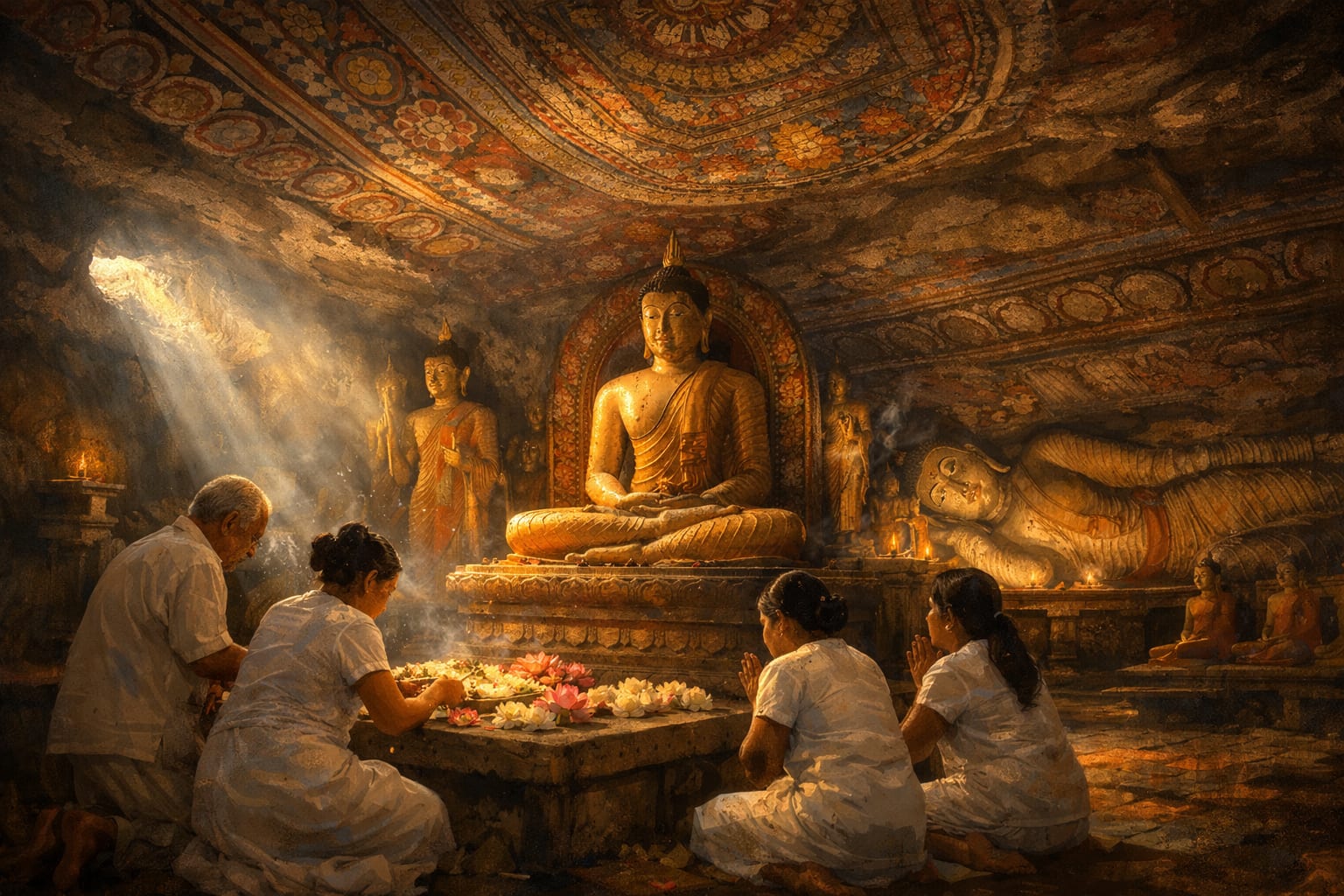
Start early at the Sigiriya rock to avoid heat and queues; the climb passes the water gardens, the mirror wall with ancient graffiti, the fresco pocket and the lion's paws before reaching the summit plateau. Allow half a day. The Sigiriya Museum near the ticket office displays excavation finds and a site model that helps orient you. Ten kilometres south, the Dambulla cave temple complex holds five caverns filled with Buddha statues and murals dating from the first century BCE onward; dress modestly and remove shoes at each shrine. For wildlife, Minneriya and Kaudulla national parks host seasonal elephant gatherings around their reservoirs, typically peaking between June and September; book a jeep safari with a licensed operator who follows park rules. Pidurangala rock, one kilometre north, offers a shorter climb and a classic view of Sigiriya itself at sunrise. The ancient city of Polonnaruwa, 55 kilometres east, makes a full-day excursion with its well-preserved stupas, image houses and the Gal Vihara rock-cut Buddhas. Anuradhapura, 70 kilometres north-west, requires a longer day but covers the sacred Bo Tree, massive dagobas and monastic ruins.
Where to stay, by area
Sigiriya village sits closest to the main entrance, with a cluster of guesthouses, mid-range hotels and a few upscale properties within walking distance or a short tuk-tuk ride. Staying here lets you enter the site at opening time and return for a midday break. Habarana, 15 kilometres south, has a wider range of accommodation from budget to luxury and sits on the main road junction for trains, buses and park access. It suits travellers who want more dining choices and easier onward transport. Dambulla, 20 kilometres south-west, is a larger town with the most extensive selection of places to eat and sleep; it works well if you plan to visit the cave temples at dawn before heading to Sigiriya. Kandalama and Kandalama Lake area, 10 kilometres west, offers lakeside resorts and eco-lodges set in forest, appealing to those who prioritise quiet and birdlife over proximity to the rock.
How long to stay
Two nights is the minimum to see Sigiriya rock, the museum, Dambulla caves and one national park without rushing. Three nights allows a relaxed pace, a sunrise climb at Pidurangala, and a day trip to Polonnaruwa or Anuradhapura. If you only have one night, arrive early, climb Sigiriya in the morning, visit Dambulla in the afternoon and move on the next day.
Practical tips
Buy tickets at the site entrance; foreign adult prices are set in US dollars and paid in rupees at the prevailing rate. Carry cash in small denominations for ticket counters, tuk-tuks and tips. Wear sturdy shoes with grip for the metal staircases and rock surfaces. Cover shoulders and knees for Dambulla and any active temple; a lightweight scarf is useful. Carry water, a hat and sunscreen; there is little shade on the climb. Monkeys are common around the entrance and gardens; keep food secured and do not feed them. For national park safaris, choose operators who keep distance from animals and stay on designated tracks; the Department of Wildlife Conservation publishes guidelines. Check the UK Foreign Office travel advice and CDC health pages for current entry requirements, vaccination recommendations and safety updates before departure. Power sockets are type D, M and G; voltage is 230 V. Mobile coverage is good in towns but patchy on the rock summit.
Next step
Download the free Sri Lanka travel starter kit for a printable packing list, sample itineraries and up-to-date visa and health links.
Frequently asked questions
How long does it take to climb Sigiriya rock?
The climb takes 60 to 90 minutes each way depending on fitness and crowd levels. Allow at least three hours for the full visit including gardens and museum.
What is the best time of day to visit Sigiriya?
Early morning at opening time avoids the strongest heat and the largest tour groups. Late afternoon is the second-best window.
Do I need a guide for Sigiriya?
A guide is not mandatory but the site has limited signage. Licensed guides wait at the entrance and can explain the frescoes, mirror wall and palace ruins.
Can I visit Sigiriya and Dambulla in one day?
Yes. Start at Sigiriya at opening, spend three to four hours, then drive 30 minutes to Dambulla for the cave temples before they close in the early evening.
Are there ATMs in Sigiriya village?
Sigiriya village has limited banking facilities. Withdraw cash in Habarana or Dambulla where multiple ATMs accept international cards.
Facts in this guide were checked against official sources on the date shown. Rules and prices change, so confirm before you travel.