
Dambulla Cave Temple: Guide to Caves, Dress Code & Tickets
The Dambulla Cave Temple is a UNESCO World Heritage site with five painted caves, over 150 Buddha statues and a living monastery. Learn what to see, wear, pay and when to go.
4 min read
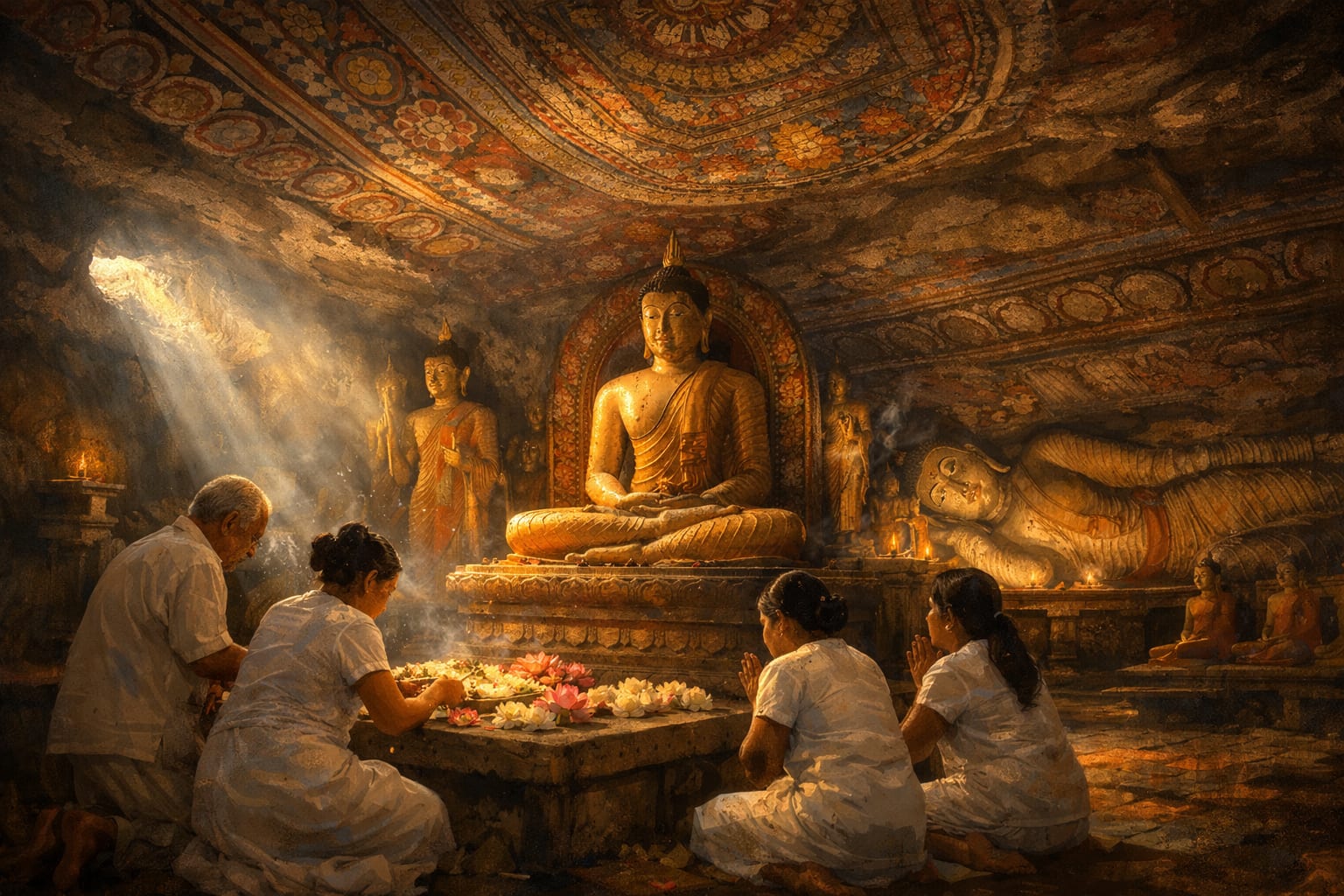
The dambulla cave temple is a UNESCO World Heritage site made up of five decorated caves set into a granite outcrop. It remains an active Buddhist monastery where pilgrims worship daily. Most visitors spend one to two hours exploring more than 150 Buddha statues and extensive mural paintings across walls and ceilings.
Key takeaways
- The complex contains five caves with statues and ceiling murals dating from the 1st century BC to the 18th century.
- Modest dress covering shoulders and knees is required; hats and shoes must be removed before entering.
- Tickets are bought at the base office; the foreign adult rate is set by the Central Cultural Fund and includes the museum.
- Early morning or late afternoon offers cooler temperatures and fewer crowds.
- The site pairs well with Sigiriya for a single day or a two‑morning split when staying nearby.
What you will see inside the five caves
The complex is officially called the Golden Temple of Dambulla. Cave one, Devaraja Viharaya, holds a 14 metre reclining Buddha carved from the living rock. Cave two, Maharaja Viharaya, is the largest and most richly decorated with dozens of seated and standing Buddhas and ceiling murals illustrating scenes from the Buddha’s life. Cave three, Maha Alut Viharaya, added in the 18th century, contains a reclining Buddha and Kandyan era paintings. Caves four and five are smaller but still display statues and frescoes. Open terraces between the caves give views over the plains toward Sigiriya on clear days. The modern Golden Temple building at the base houses a large seated Buddha and a museum separate from the ancient caves.
What should I wear at Dambulla cave temple?
Because the caves are an active place of worship, modest clothing is mandatory. Both men and women must cover shoulders and knees. Remove hats and caps before entering each cave. Footwear is left at the designated rack near the entrance where a small donation is customary. Keep voices low, avoid posing with your back to Buddha images, and respect any signs prohibiting flash photography. Monks and devotees may be meditating or making offerings; give them space and do not interrupt.
Tickets, entry and opening hours
Purchase tickets at the ticket office near the base of the rock before starting the climb. The foreign adult price is set by the Central Cultural Fund and differs from the local rate; children and SAARC nationals may receive reduced fees. Prices can change, so check the Central Cultural Fund or Sri Lanka Tourism Promotion Bureau website for the current rate before you travel. Keep the ticket until you leave as it may be checked at the cave entrances and also covers entry to the museum in the Golden Temple building. The site usually opens early morning and closes early evening, with the ticket office shutting about an hour before the site closes. Exact hours can shift by season and on poya (full moon) holidays when local crowds increase. Early morning or late afternoon is cooler and less busy. The climb from the ticket office to the caves takes 15 to 25 minutes on a paved stairway with a moderate slope; wear sturdy shoes and carry water. Monkeys are common on the steps, so keep food packed away and do not feed them.
How to combine Dambulla with Sigiriya?
Dambulla and Sigiriya are close enough for a single day, but the order depends on where you stay and how you handle heat. Many travellers climb Sigiriya at dawn when temperatures are lower and light is better, then drive 25 minutes to Dambulla for a mid‑morning cave visit. Others reverse the order, starting with the caves and reaching Sigiriya by mid‑afternoon. If you base yourself in Dambulla or Habarana, you can split the two sites across two mornings for a more relaxed pace. Public buses run between the towns, yet a hired car or tuk‑tuk with a driver for the day gives greater flexibility. The Sri Lanka Tourism Promotion Bureau site lists suggested Cultural Triangle routes that link both sites with Anuradhapura and Polonnaruwa. For more detail on Sigiriya see the Sigiriya travel guide.
Getting there and practicalities
Dambulla town sits on the A9 Kandy to Jaffna road. From Colombo the drive takes about four hours via Kurunegala; from Kandy it is roughly two and a half hours. Trains do not reach Dambulla directly; the nearest station is Habarana, about 15 kilometres away, with a tuk‑tuk or taxi for the final stretch. Private drivers can be arranged through your accommodation or a reputable agency; agree the full day rate and waiting time before departure. Ride‑hailing apps may have patchy coverage outside main towns, so verify availability. Restaurants and cafés cluster around Dambulla town and the main road near the cave entrance. Toilets are available at the ticket office and near the Golden Temple; carry tissue and hand sanitiser. ATMs are in Dambulla town, so withdraw cash before heading to the site because card payment at the ticket counter is not guaranteed. The Sri Lanka Tourism Promotion Bureau provides a downloadable Cultural Triangle map that marks the cave complex, Sigiriya and other heritage sites (https://www.srilanka.travel/). For a broader itinerary covering the Cultural Triangle see the 7 day Sri Lanka itinerary.
Responsible travel notes
The caves are a living religious site, not just a museum. Donations to the temple are welcome but never required. Do not buy artefacts or fragments from unofficial sellers because removing cultural property is illegal. Support local guides who hold a Central Cultural Fund licence; they can explain the iconography and history accurately. If you plan several heritage sites, the Central Cultural Fund round ticket covers more than one location and may lower your total cost; check the official site for current inclusions and validity. You can also download the free Sri Lanka travel starter kit for printable checklists and a Cultural Triangle planner.
Next step
Get the Come To Sri Lanka free Sri Lanka travel starter kit at /newsletter/ for printable checklists, a Cultural Triangle planner and up to date visa and health links.
Facts in this guide were checked against official sources on the date shown. Rules and prices change, so confirm before you travel.
Frequently asked questions
dambulla cave temple dress code
Shoulders and knees must be covered for men and women. Remove hats and shoes before entering the caves. Footwear can be left at the designated rack near the entrance for a small donation.
dambulla cave temple ticket price for foreigners
Ticket prices are set by the Central Cultural Fund and differ for foreign adults, children and SAARC nationals. Check the Central Cultural Fund or Sri Lanka Tourism Promotion Bureau website for the current rate before you travel.
how to visit dambulla and sigiriya in one day
Most travellers climb Sigiriya at dawn then drive 25 minutes to Dambulla for a mid‑morning cave visit, or reverse the order. Staying in Dambulla or Habarana lets you split the sites across two mornings. A hired car or driver for the day gives the most flexibility.
best time to visit dambulla cave temple
Early morning or late afternoon offers cooler temperatures and fewer crowds. The site opens early and closes early evening; exact hours vary by season and on poya holidays.
how to get to dambulla cave temple from colombo
Drive about four hours via Kurunegala on the A9 road. The nearest train station is Habarana, 15 kilometres away, with a tuk‑tuk or taxi for the final stretch. Private drivers can be booked in advance.