
Udawalawe vs Yala: choose the best Sri Lanka safari park
Udawalawe offers reliable elephant herds and quieter drives, while Yala is known for strong leopard sightings in Sri Lanka. Choose the park that matches your wildlife priorities and travel route.
5 min read
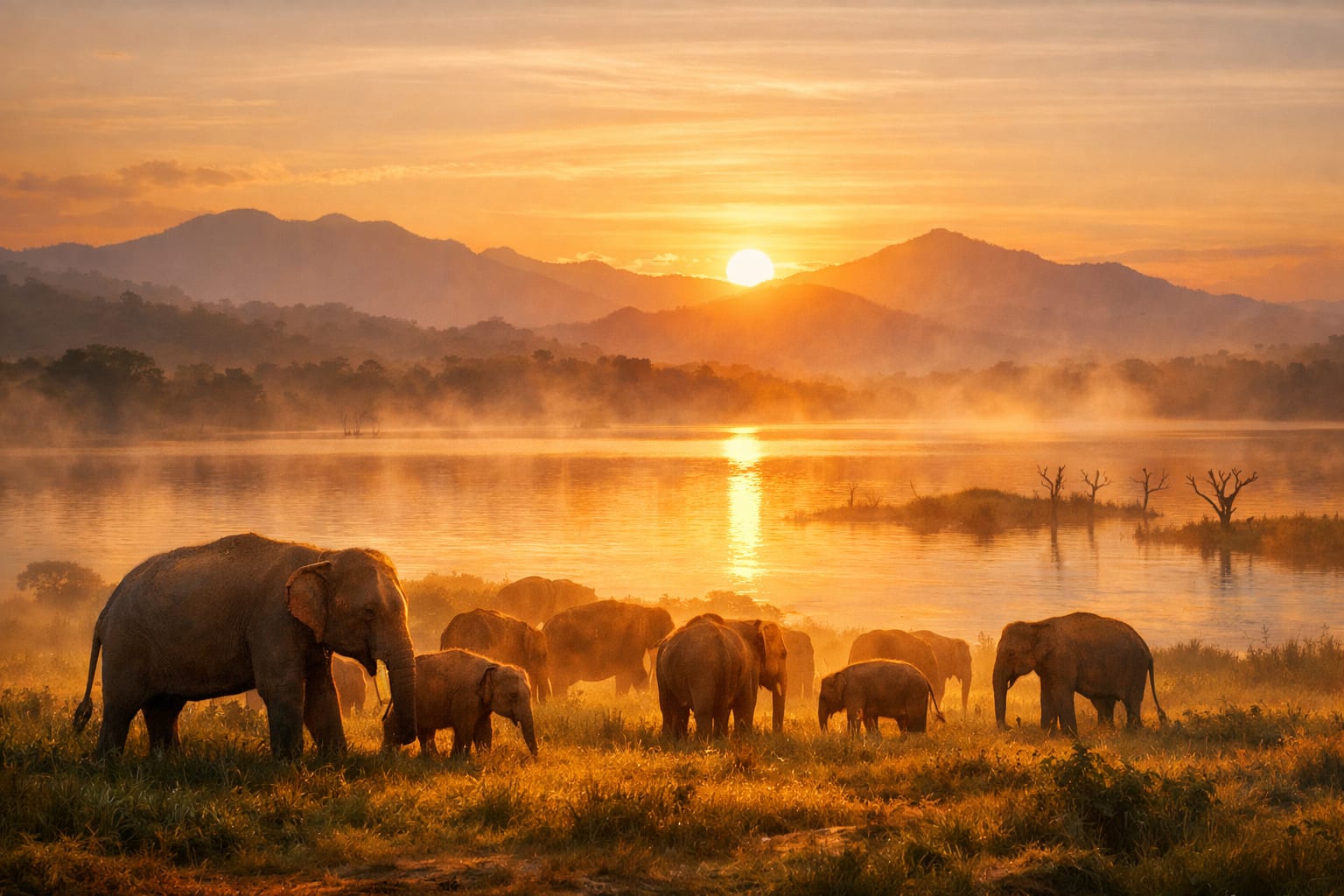
When you search for Udawalawe vs Yala, the answer depends on which animals you want to see and how much travel time you have. Udawalawe is famous for large elephant gatherings around its reservoir, while Yala is widely known for one of the highest recorded leopard densities in Sri Lanka, according to wildlife studies and the Department of Wildlife Conservation. Both parks are open year round, and either can work well if you plan your route carefully.
Key takeaways
- Udawalawe is the better bet for reliable elephant sightings.
- Yala is the stronger choice if leopards are your main goal.
- Udawalawe usually feels calmer, with fewer vehicles on the tracks.
- Yala fits naturally into a southeast and south coast route.
- Both parks are best enjoyed with an early start and a licensed jeep.
Which park gives the best elephant sightings?
Udawalawe is the top choice for elephants because herds often gather around the reservoir throughout the year. The open terrain makes photography easier, and sightings are usually frequent enough that first-time safari travellers feel satisfied. Yala also has elephants, but they’re more dispersed and can be harder to locate.
If elephants are the main reason for your safari, Udawalawe is usually the safer pick. It’s also a good option for travellers who want a shorter, less intense game drive without giving up the chance to see large mammals.
Which park offers the highest chance of seeing a leopard?
Yala is the better park for leopard seekers, and that’s why it gets so much attention. Wildlife studies and the Department of Wildlife Conservation have long described Yala as having one of the highest recorded leopard densities in Sri Lanka, which gives it a real edge for big-cat enthusiasts.
That said, leopard sightings are never guaranteed. Early morning and late afternoon drives improve your chances, but patience still matters. If you’re choosing between the two parks mainly for cats, Yala is the one to prioritise.
Crowd levels and visitor experience
Yala crowds
Yala attracts a lot of visitors, especially in the busier months from February to June. The main entrance at Palatupana can get crowded, and several jeeps may end up sharing the same tracks when a leopard is reported.
That doesn’t make Yala a bad experience, but it does mean the safari can feel more competitive. If you prefer a livelier atmosphere and don’t mind other vehicles nearby, that may not bother you.
Udawalawe calm
Udawalawe usually receives fewer vehicles, so drives often feel more relaxed. You’re more likely to enjoy longer stretches of quiet and a less hurried pace, which suits travellers who want a calmer wildlife experience.
For many visitors, that difference is the deciding factor. If you want a safari that feels a little less hectic, Udawalawe is often the better fit.
Where are they, and how do you fit them into a route?
Udawalawe and Yala both work best when they’re placed into a sensible travel sequence, not as isolated day trips from Colombo.
From Colombo and the hill country
Udawalawe is in the south central lowlands and is about 180 kilometres from Colombo by road, which is usually around 4 to 5 hours depending on traffic and your exact starting point. It’s also a practical stop after Ella, so it fits neatly into a hill country to south coast journey.
If you’re building a wider trip, the Ella travel guide can help you combine tea country, train travel and a safari without wasting time on backtracking. For a broader route, the 7 day Sri Lanka itinerary is a useful starting point too.
From the south coast
Yala lies further southeast and is roughly 300 kilometres from Colombo by road, which is commonly about 5.5 to 7 hours depending on traffic and where you start. The main gate at Palatupana is near Tissamaharama, and the park fits naturally into a route that continues to the southern beaches.
If you’re heading onward after Yala, the Mirissa travel guide is useful for planning a beach stop that doesn’t force you to double back inland.
A logical 10-day route
If you want to visit both parks in one trip, a more sensible sequence is:
- Cultural Triangle
- Ella
- Udawalawe
- Yala
- South coast
That order keeps the trip moving south and avoids unnecessary backtracking. It also gives you a nice balance of ruins, hills, wildlife and beach time.
When is the best time to visit each park?
The dry season is the most reliable time for both parks because animals tend to gather around water sources and the tracks are easier to manage. In general, visibility improves when the vegetation is less dense and the weather is more settled.
Seasonal differences
In Yala, February to June is often considered the strongest period for leopard activity. In Udawalawe, elephant sightings are especially good from June to October when water levels in the reservoir drop and animals concentrate around remaining water.
Monsoon considerations
The northeast monsoon from October to January can make some tracks muddy in Yala, while Udawalawe’s tracks are often less affected. Even so, conditions can change quickly, so check DWC alerts for both parks before you book or travel.
Practical tips for a responsible safari
A good safari is not just about what you see, but how you travel. Respect for wildlife and local communities makes the experience better for everyone.
- Book a licensed jeep and driver through a registered operator.
- Wear neutral coloured clothing, a hat and sturdy shoes.
- Carry water, sunscreen and insect repellent, since there are no shops inside the parks.
- Stay on designated tracks and keep to the speed limit to protect habitats.
- Avoid loud music, sudden movements and anything that pressures animals for a photo.
- Remember that park opening hours are typically 6 am to 6 pm, and entry fees are set by the Department of Wildlife Conservation. Check the official site for current LKR rates and permit procedures before you go.
If you’re still planning the rest of your trip, the free Sri Lanka travel starter kit can help with packing, route planning and practical trip prep without adding more research to your list.
So, which park should you choose?
Udawalawe is usually the better choice if you want dependable elephant sightings, a calmer atmosphere and an easy fit into a hill country route. Yala is the stronger option if your priority is leopards and you’re happy to trade a busier safari for a better chance of spotting a big cat.
If you have time, both parks can be worthwhile on the same trip. If you only have room for one, let your route and your wildlife priorities decide.
Next step
Get the free starter kit at the free Sri Lanka travel starter kit and start building a safari plan that matches your wildlife wishes, travel pace and route.
Facts in this guide were checked against official sources on the date shown. Rules and prices change, so confirm before you travel.
Frequently asked questions
Which park is better for leopard sightings?
Yala is the better choice for leopard sightings because wildlife studies and the Department of Wildlife Conservation describe it as having one of the highest recorded leopard densities in Sri Lanka.
Is Udawalawe less crowded than Yala?
Yes, Udawalawe generally receives fewer vehicles, so game drives often feel quieter and more relaxed.
Can I visit both Udawalawe and Yala on one trip?
Yes. A sensible route is Cultural Triangle, Ella, Udawalawe, Yala and then the south coast, which avoids backtracking.
What is the best time of year for elephant viewing in Udawalawe?
The dry season from June to October often gives strong elephant viewing because the reservoir level drops and animals gather near water.
Do I need a permit for a safari in either park?
Yes, a permit is required for each vehicle. It can be arranged through a licensed operator or checked directly with the Department of Wildlife Conservation.