
Mirissa Sri Lanka: Whale Watching, Surf & Where to Stay
Mirissa Sri Lanka offers calm bays for whale watching, beginner friendly surf and a relaxed beach vibe. Find where to stay, eat and explore on the south coast.
6 min read
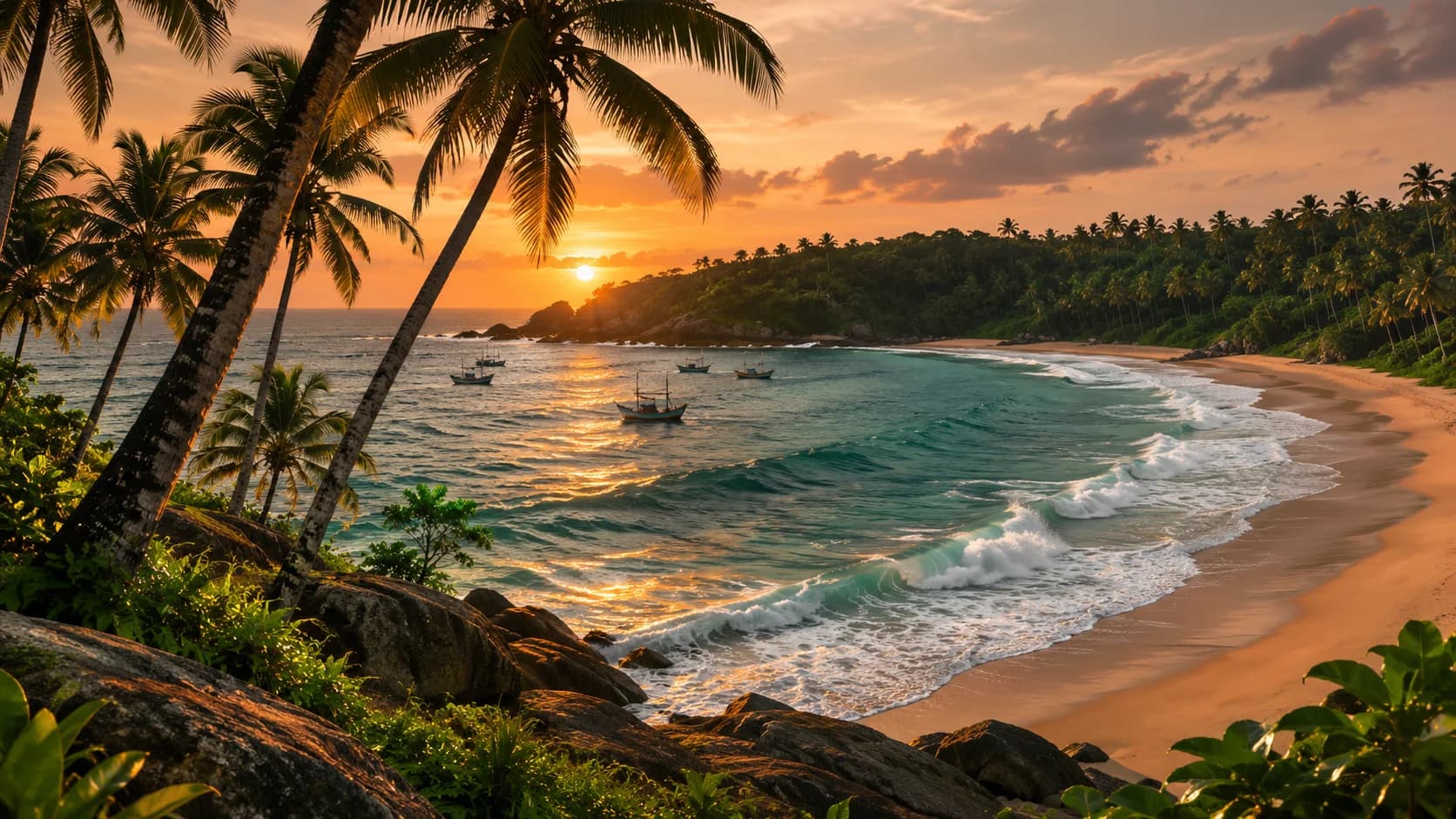
Mirissa Sri Lanka sits on the southern coastline of the island in the Matara District, about 150 kilometres from Colombo and a two and a half to three and a half hour drive from Bandaranaike International Airport. The town is reached easily by the Southern Expressway or the scenic A2 coastal road, and the nearest railway station is Weligama, six kilometres north. This compact beach destination blends a working fishing harbour with a laid back traveller scene.
Key takeaways
- Prime whale watching from November to April with licensed operators.
- Three surf breaks within walking distance suit beginners to advanced riders.
- Accommodation ranges from budget dorms to cliff top boutique villas.
- Easy day trips to Galle fort, Weligama Bay and nearby wildlife parks.
Where is Mirissa in Sri Lanka?
Mirissa lies on the south coast of Sri Lanka in the Matara District, roughly 150 kilometres south of Colombo. The Southern Expressway exit at Weligama cuts travel time significantly during peak periods, while the A2 coastal road offers ocean views the whole way. Trains from Colombo Fort and Galle stop at Weligama station, where tuk‑tuks wait for the short ride to the beach. If you arrive at night in Colombo, a pre‑booked driver on the expressway can have you in Mirissa before midnight.
What is Mirissa Sri Lanka like?
Mirissa feels like a low key fishing village that has grown into a beach destination without losing its compact scale. The main bay curves around a sandy beach lined with palm trees, cafés, dive shops and guesthouses. The western end near the harbour is quieter and backs onto coconut groves, while the eastern end near Parrot Rock has more bars and restaurants. Streets behind the beach are narrow and walkable, with a mix of local homes, yoga shalas and small supermarkets. The vibe shifts through the day: early morning brings fishing boats and whale watching departures, midday fills the beach with sunbathers and surfers, and sunset triggers a steady flow of travellers moving between beachfront bars.
Whale watching season and practical tips
Blue whales, sperm whales and spinner dolphins are the main draw, with the peak season running from November to April when the continental shelf drops close to shore and seas are generally calm. Boats leave the harbour around 6 am and return by midday. The Department of Wildlife Conservation regulates operators, so choose a company that displays a DWC licence and follows the code of conduct: keep 100 metres from whales, limit viewing time to 15 minutes per pod, and never chase or encircle animals. Trips typically cost between LKR 10,000 and LKR 15,000 per person for a shared boat, with private charters starting around LKR 60,000. Prices were checked in early 2024; confirm current rates with the operator before booking. Seasickness is common, so take medication 30 minutes before departure and sit near the centre of the boat. Morning light is best for photography, and a polarising filter helps cut glare on the water. For the official guidelines see the Sri Lanka Tourism Development Authority site https://www.sltda.gov.lk/.
Surf spots for every level
Mirissa offers three main breaks within walking distance of each other. Mirissa Point at the eastern end of the bay is a right hand reef break that works best on a mid to high tide with a southwest swell; it suits intermediate to advanced surfers and can get crowded in peak season. Just inside the bay, the beach break in front of the main strip is forgiving at low tide and ideal for beginners taking lessons from one of the local surf schools. A short tuk‑tuk ride west brings you to Weligama Bay, a long sandy beach with gentle rolling waves that is widely regarded as one of the best beginner spots on the island. Board rentals run LKR 500 to LKR 1,000 per hour, and group lessons start around LKR 3,500 for two hours including board and rash guard. The southwest monsoon from May to October brings onshore winds and bigger swell, so conditions are most consistent from November to March. When the swell picks up, the lineup at Mirissa Point can hold a dozen riders; arrive early if you want a clean take off.
Nightlife from sunset to sunrise
Nightlife in Mirissa centres on the beachfront strip between the main junction and Parrot Rock. Sunset sessions start around 5 pm at bars like Zephyr, The Doctor's House and Starfish, where you can order arrack cocktails, fresh king coconut and wood fired pizza with your feet in the sand. After 10 pm the music shifts to DJ sets and the crowd moves between venues; some nights feature fire dancers or live bands. Friday and Saturday are the busiest, especially during holiday periods. For a quieter evening, head to the western end of the beach where a handful of cafés stay open late with acoustic sets and board games. Alcohol is sold at licensed bars and restaurants; there are no standalone liquor stores in town, so stock up at the Wine Stores outlet near Weligama if you plan to drink at your accommodation.
Accommodation in Mirissa Sri Lanka: budget to boutique
Options range from dorm beds in backpacker hostels to cliff top villas with private plunge pools. Budget travellers will find dormitories from LKR 2,500 per night and basic private rooms from LKR 5,000 at places like Hangover Hostel, Surfers Paradise and Mirissa Hills Hostel. Mid range guesthouses and boutique hotels such as Paradise Beach Club, Mandara Resort and Lantern Boutique Hotel charge LKR 12,000 to LKR 25,000 for a double room with breakfast, often including a pool and direct beach access. At the upper end, properties like Cape Weligama (technically in Weligama but a short drive away) and private villas listed on Airbnb can exceed LKR 80,000 per night, offering butler service, ocean view infinity pools and in villa dining. Booking early is essential for December to February; many places open reservations six months ahead. Check cancellation policies carefully, as some smaller guesthouses require full prepayment and are non refundable. If you arrive without a booking in the shoulder season, you can usually negotiate a walk in rate at the smaller family run places.
Getting around and practical essentials
Tuk‑tuks are the default for short hops; agree a price before you get in or use the PickMe app for metered fares. Bicycles and scooters are available for rent at LKR 1,500 to LKR 2,500 per day from shops along the main road; wear a helmet and carry an international driving permit if you choose a scooter. Popular half day trips include the stilt fishermen at Koggala (20 minutes west), the historic fort at Galle (40 minutes west) and the turtle hatchery at Rekawa (45 minutes east) where you can watch nesting at night during season. For a full day, hire a driver to combine Yala National Park block 1 (2.5 hours east) with a stop at the Buduruwagala rock carvings on the return leg. If you have a free morning, a bicycle ride to the quiet cove at Polhena reef lets you snorkel over coral gardens before the tour boats arrive. Sri Lanka uses Type D, M and G plugs at 230 V; bring a universal adapter. Mobile coverage is strong on Dialog and Mobitel networks; tourist SIMs with data are sold at the airport and in town for around LKR 1,500 for 10 GB valid 30 days. Tap water is not potable; use filtered water stations at cafés or buy large refill bottles. Dress modestly when leaving the beach: shoulders and knees covered for temples, and no swimwear in shops or restaurants. For visa requirements, most nationalities need an Electronic Travel Authorization obtained via https://eta.gov.lk/slvisa/ before arrival; check the official site for your passport. If you want a ready made packing list and transport cheat sheet, grab our free Sri Lanka travel starter kit.
Next step
Ready to build your south coast itinerary? Get the free Sri Lanka travel starter kit at our free Sri Lanka travel starter kit for a printable packing list, transport cheat sheet and a two week route that threads Mirissa, Galle, Ella and the Cultural Triangle into one smooth trip.
Facts in this guide were checked against official sources on the date shown. Rules and prices change, so confirm before you travel.
Frequently asked questions
where is mirissa in sri lanka
Mirissa is a beach town on the south coast of Sri Lanka in the Matara District, about 150 kilometres from Colombo and a two and a half to three and a half hour drive from Bandaranaike International Airport via the Southern Expressway or the A2 coastal road.
what's in mirissa sri lanka
Mirissa offers a crescent beach, blue whale watching from November to April, three surf breaks for all levels, a beachfront nightlife strip with bars and restaurants, and accommodation from budget hostels to boutique villas.
why not mirissa sri lanka
Travellers seeking large all inclusive resorts, high end shopping, or a lively city atmosphere may prefer destinations like Colombo or the west coast resort belts; Mirissa stays small, low rise and beach focused.
what is mirissa sri lanka like
Mirissa feels like a low key fishing village that has grown into a beach destination without losing its compact scale, with a curved sandy bay, palm lined cafés, a working harbour and a relaxed day to night rhythm.
how sri lanka
Sri Lanka is an island nation in the Indian Ocean reached by international flights to Bandaranaike International Airport near Colombo; most visitors need an Electronic Travel Authorization obtained online before arrival.