
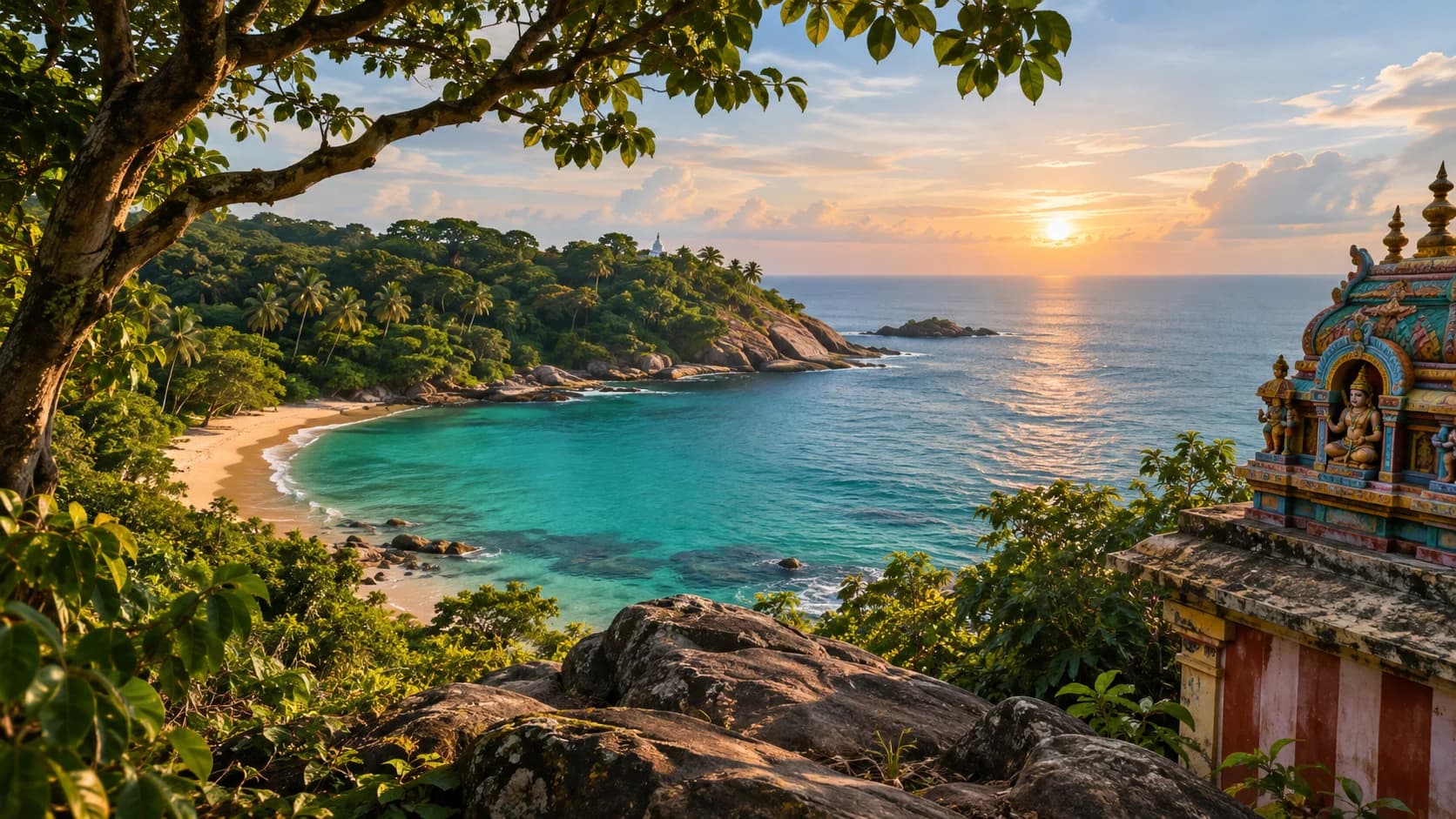
Trincomalee travel guide: beaches, history and when to visit
Trincomalee is a historic port city on Sri Lanka's northeast coast known for its natural harbour, white-sand beaches and Hindu and Buddhist pilgrimage sites. This guide gives you the practical overview you need to decide how long to stay, where to base yourself and what to prioritise.
Trincomalee sits on a peninsula that forms one of the world's largest natural harbours, a fact that has shaped its history from ancient maritime trade to colonial conflict and modern naval presence. Today it draws travellers for its calm bays, offshore reefs and a cluster of religious monuments that reflect the island's layered past.
Why go
Trincomalee offers a mix of beach relaxation, snorkelling access and cultural depth that is distinct from the more developed south and west coasts. The area is known for Nilaveli and Uppuveli beaches, the offshore Pigeon Island marine park, and the Koneswaram Temple complex perched on Swami Rock. Whale watching runs seasonally from the harbour, and the surrounding district holds wartime history, hot springs and access to less-visited national parks.
When to go
The northeast coast follows a different monsoon pattern from the rest of Sri Lanka. The dry season runs roughly from May to September when seas are calm and rainfall is low. The northeast monsoon brings heavier rain and rougher seas from October to January, though February to April can be a pleasant shoulder period. Whale watching is most reliable between May and September. Check the Sri Lanka Tourism Promotion Bureau for current seasonal advice.
How to get there
Trincomalee is about 260 kilometres from Colombo by road. The most common routes are the A6 via Habarana and the A12 via Kurunegala and Dambulla. Journey times vary with traffic and roadworks but typically fall between six and eight hours by car or tourist bus. A domestic flight from Colombo (Ratmalana or Bandaranaike) to China Bay airport takes under an hour; schedules are limited and subject to change. The railway line from Colombo Fort reaches Trincomalee via Gal Oya Junction; the overnight mail train and a daytime service operate but timetables shift. For current fares and booking, consult Sri Lanka Railways or the official ETA site if you need a visa on arrival.
Getting around
Within the town and to nearby beaches, tuk-tuks are the default short-distance transport. Agree a fare before you set off; rates rise after dark. For day trips to Pigeon Island, Kanniya hot springs or the war cemetery, hiring a tuk-tuk for the day or a car with driver is simpler than piecing together local buses. Local buses connect Trincomalee town with Nilaveli and Uppuveli but run infrequently and can be crowded. Bicycle hire is available in the beach zones and suits the flat coastal roads.
Things to do
Koneswaram Temple sits on Swami Rock overlooking the harbour. It is an active Hindu pilgrimage site; dress modestly, remove shoes and avoid turning your back on shrines when photographing. The adjacent Lovers' Leap cliff has views back to town. Fort Frederick, originally built by the Portuguese and expanded by the Dutch and British, encloses the temple and houses a small military museum; entry is free but access can be restricted during security alerts. The Commonwealth War Cemetery on the road to Nilaveli is maintained by the Commonwealth War Graves Commission and open daily. Pigeon Island National Park lies about one kilometre offshore from Nilaveli; boat operators run from the beach and the Department of Wildlife Conservation manages entry permits. Snorkelling here reveals coral gardens and reef fish; do not stand on coral or chase turtles. The Kanniya hot springs, seven square wells with varying temperatures, sit a short drive inland and are used by locals for therapeutic bathing. Whale watching boats depart from the harbour between May and September; choose operators who follow the Department of Wildlife Conservation guidelines on approach distances. For a deeper wildlife experience, consider a day trip to the less-crowded parks in the east; our guide on choosing the best Sri Lanka safari park compares options.
Where to stay, by area
Trincomalee town puts you near the harbour, fort, temple, market and bus and train stations. Accommodation ranges from budget guesthouses to mid-range hotels, mostly set back from the water. It suits travellers who want walkable access to services and early departures for boats or buses.
Uppuveli is a beach strip four kilometres north of town. The bay is generally swimmable year-round, with a line of guesthouses, restaurants and dive shops along the sand. It is livelier in the evening and convenient for day trips to Pigeon Island.
Nilaveli stretches further north with a wider, quieter beach and clearer water outside the monsoon. Accommodation skews toward mid-range and upper-mid-range resorts set in gardens. It suits longer beach stays and families.
Marble Beach and the Kuchchaveli area lie further north toward the lagoon and offer a handful of boutique properties in a more secluded setting; access requires a vehicle or pre-arranged transfer.
How long to stay
Two to three nights covers the main sites: a morning at Koneswaram and Fort Frederick, a boat trip to Pigeon Island, an evening on the beach and a half-day for the hot springs or war cemetery. Add a night if you want a whale-watching window or a day trip to a national park. Trincomalee also fits well into a broader east-coast loop; our 7 day Sri Lanka itinerary culture hills coast shows how to combine it with the Cultural Triangle and hill country.
Practical tips
Dress codes apply at all religious sites: shoulders and knees covered, shoes removed. At Hindu temples, men may be asked to remove shirts in the inner sanctum; carry a light scarf. The Sri Lanka Etiquette Guide for First-Time Visitors covers temple protocol, greeting customs and tipping norms. Carry cash in small denominations; ATMs exist in town but can run dry on holiday weekends. Mobile coverage is good in town and beach zones; buy a local SIM at the airport or in Colombo for data. Tap water is not potable; use filtered or bottled water. Power cuts occur; a power bank is useful. The UK Foreign Office travel advice and CDC travel health pages list current entry requirements, health notices and safety updates; check both before departure. Visa rules vary by nationality; the official ETA portal is the authoritative source for application and fees. For budgeting, our Sri Lanka trip cost guide breaks down daily spend by travel style; prices were last reviewed in early 2024 and are quoted in Sri Lankan rupees.
Next step
Grab the free Sri Lanka travel starter kit for a printable packing list, budget planner and a one-page cheat sheet of essential phrases and emergency numbers.
Frequently asked questions
Is Trincomalee safe for solo travellers?
Trincomalee is generally safe for solo travellers who take normal precautions. Keep valuables out of sight, avoid isolated beaches after dark and register with your embassy if staying long term.
Can I swim at Trincomalee beaches year-round?
Swimming is best from May to September when the sea is calm. From October to January the northeast monsoon brings rough conditions and strong currents; always heed local advice and red-flag warnings.
Do I need a permit for Pigeon Island?
Yes, entry to Pigeon Island National Park requires a permit issued by the Department of Wildlife Conservation. Boat operators usually arrange this as part of the trip cost.
What is the dress code for Koneswaram Temple?
Shoulders and knees must be covered and shoes removed before entering. Men may need to remove shirts in the inner sanctum; carry a light scarf or shawl.
How do I pay for things in Trincomalee?
Cash in Sri Lankan rupees is essential for tuk-tuks, markets, small eateries and temple donations. Larger hotels and some dive centres accept cards but surcharges are common.
Facts in this guide were checked against official sources on the date shown. Rules and prices change, so confirm before you travel.