
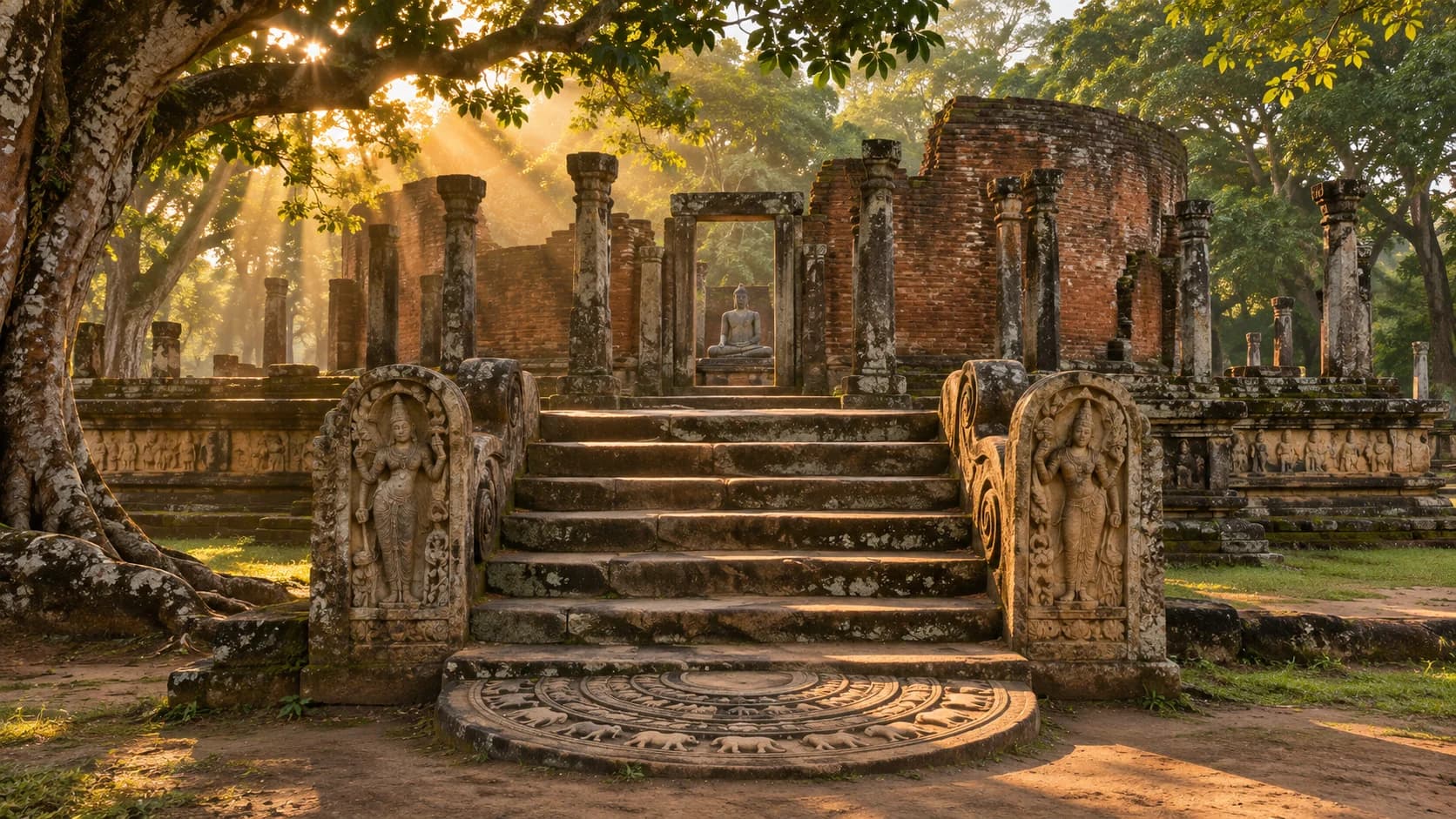
Polonnaruwa: Sri Lanka's Medieval Capital and Ruins
This guide is for travellers planning a visit to Polonnaruwa, Sri Lanka's second ancient capital. It covers the archaeological park, transport options, where to base yourself and practical details for a smooth trip.
Why go
Polonnaruwa was Sri Lanka's medieval capital from the 11th to 13th centuries and its ruins form one of the island's most compact and well-preserved archaeological parks. The site sits within a UNESCO World Heritage area that includes royal palaces, Buddhist temples, Hindu shrines and massive irrigation reservoirs built by the Chola and Sinhalese kings. Travellers come to walk among the Gal Vihara rock-cut Buddhas, the circular Vatadage relic house and the Parakrama Samudra reservoir that still waters the region.
When to go
The dry season from May to September brings the most reliable weather for exploring the open-air ruins, though temperatures often exceed 30°C. The northeast monsoon from October to January brings heavy rain that can make cycling between sites muddy and uncomfortable. April and the Christmas period see higher visitor numbers and accommodation prices rise accordingly. Check the Sri Lanka Tourism Promotion Bureau for current seasonal advice (https://www.srilanka.travel/).
How to get there
Polonnaruwa lies 216 kilometres northeast of Colombo and is reached by road or rail. The train from Colombo Fort takes around six to seven hours with a change at Maho, while a private car or tourist bus covers the distance in five to six hours depending on traffic. Buses run regularly from Colombo's Pettah station and from Kandy, Anuradhapura and Dambulla. The nearest domestic airport is at Sigiriya, 50 kilometres away, with flights from Colombo operated by Cinnamon Air. For current train timetables and bus routes, consult the Sri Lanka Railways and National Transport Commission websites.
Getting around
The archaeological park spreads over several kilometres and most visitors rent bicycles from shops near the ticket office or hire a tuk-tuk for the day. Cycling is flat and pleasant in the early morning but becomes hot by midday. Tuk-tuk drivers often act as informal guides; agree a price before setting off. Some guesthouses provide bicycles free for guests. The main sites are connected by paved roads suitable for any vehicle.
Things to do
The core of a visit is the archaeological park, entered with a single ticket purchased at the museum near the Parakrama Samudra. Key sites include the Royal Palace complex, the Audience Hall with its carved lions, the Sacred Quadrangle containing the Vatadage, Thuparama and Hatadage, and the Rankoth Vehera and Kiri Vehera stupas. The Gal Vihara features four Buddha statues carved from a single granite face, including a 14-metre reclining figure. The Lankatilaka image house retains its towering walls and a headless standing Buddha. Outside the main park, the Parakrama Samudra bund offers walking and birdwatching at dawn. The Polonnaruwa Museum displays statues, inscriptions and a scale model of the ancient city. For a deeper cultural context, read the Sri Lanka etiquette guide for first-time visitors before entering religious sites.
Where to stay, by area
Most accommodation clusters in three zones. The area around the new town and main road (Colombo Road) has the widest range of guesthouses, mid-range hotels and restaurants, all within a short tuk-tuk ride of the park entrance. The lakeside zone along the Parakrama Samudra bund is quieter, with a handful of eco-lodges and boutique properties set among trees and water; these suit travellers who want early access to the ruins and birdlife. The Giritale area, 15 kilometres north, sits beside another ancient reservoir and offers larger resorts with pools, suited to families or those combining Polonnaruwa with a Minneriya or Kaudulla safari. All areas have basic shops and pharmacies; the new town has the most ATMs and a supermarket.
How long to stay
One full day covers the main archaeological sites at a relaxed pace, especially if you start at opening time to beat the heat and crowds. Two days allow a slower cycle around the park, a visit to the museum, a morning walk on the Parakrama Samudra bund and a half-day trip to Minneriya or Kaudulla national park for elephant gatherings. Many itineraries, such as the 7 day Sri Lanka itinerary culture hills coast, slot Polonnaruwa as a single night between Sigiriya and the east coast or Kandy.
Practical tips
Dress modestly for temple visits: shoulders and knees covered, shoes removed at entrances. Carry water, a hat and sunscreen; shade is limited among the ruins. The park ticket price is set by the Central Cultural Fund and varies by nationality; check the official Sri Lanka Tourism website for current rates. Tickets are valid for a single day and do not include the museum, which has a separate fee. Toilets are available at the museum and near the Gal Vihara. Electricity supply can be intermittent in rural areas; a power bank is useful. Mobile coverage is good on Dialog and Mobitel networks. For health advice including vaccinations, consult the CDC travel health page for Sri Lanka (https://wwwnc.cdc.gov/travel/destinations/traveler/none/sri-lanka). UK travellers should review the UK Foreign Office travel advice for Sri Lanka (https://www.gov.uk/foreign-travel-advice/sri-lanka) before departure. Visa requirements depend on nationality; most visitors need an ETA obtained online via the official Sri Lanka ETA website (https://eta.gov.lk/slvisa/).
Next step
Download the free Sri Lanka travel starter kit for a printable packing list, budget planner and itinerary templates that include Polonnaruwa.
Frequently asked questions
How much does the Polonnaruwa archaeological park ticket cost?
The ticket price is set by the Central Cultural Fund and varies by nationality. Check the official Sri Lanka Tourism website for current rates as they change periodically.
Can I visit Polonnaruwa as a day trip from Sigiriya or Dambulla?
Yes, Polonnaruwa is about 60 kilometres from Sigiriya and 70 kilometres from Dambulla, reachable in 1.5 to 2 hours by car or tuk-tuk. An early start allows a full day at the ruins before returning.
Is cycling around the Polonnaruwa ruins safe and easy?
The roads between sites are flat, paved and lightly trafficked, making cycling straightforward in the cooler morning hours. Heat and midday sun are the main challenges; carry water and wear a helmet.
What should I wear when visiting the Buddhist sites in Polonnaruwa?
Wear clothing that covers shoulders and knees, and be prepared to remove shoes and hats at temple entrances. Light, loose fabrics work best in the heat.
Are there ATMs and places to change money in Polonnaruwa?
The new town area has several ATMs accepting international cards and a few money changers. It is wise to carry enough cash for park tickets, transport and small purchases in case machines are offline.
Facts in this guide were checked against official sources on the date shown. Rules and prices change, so confirm before you travel.