
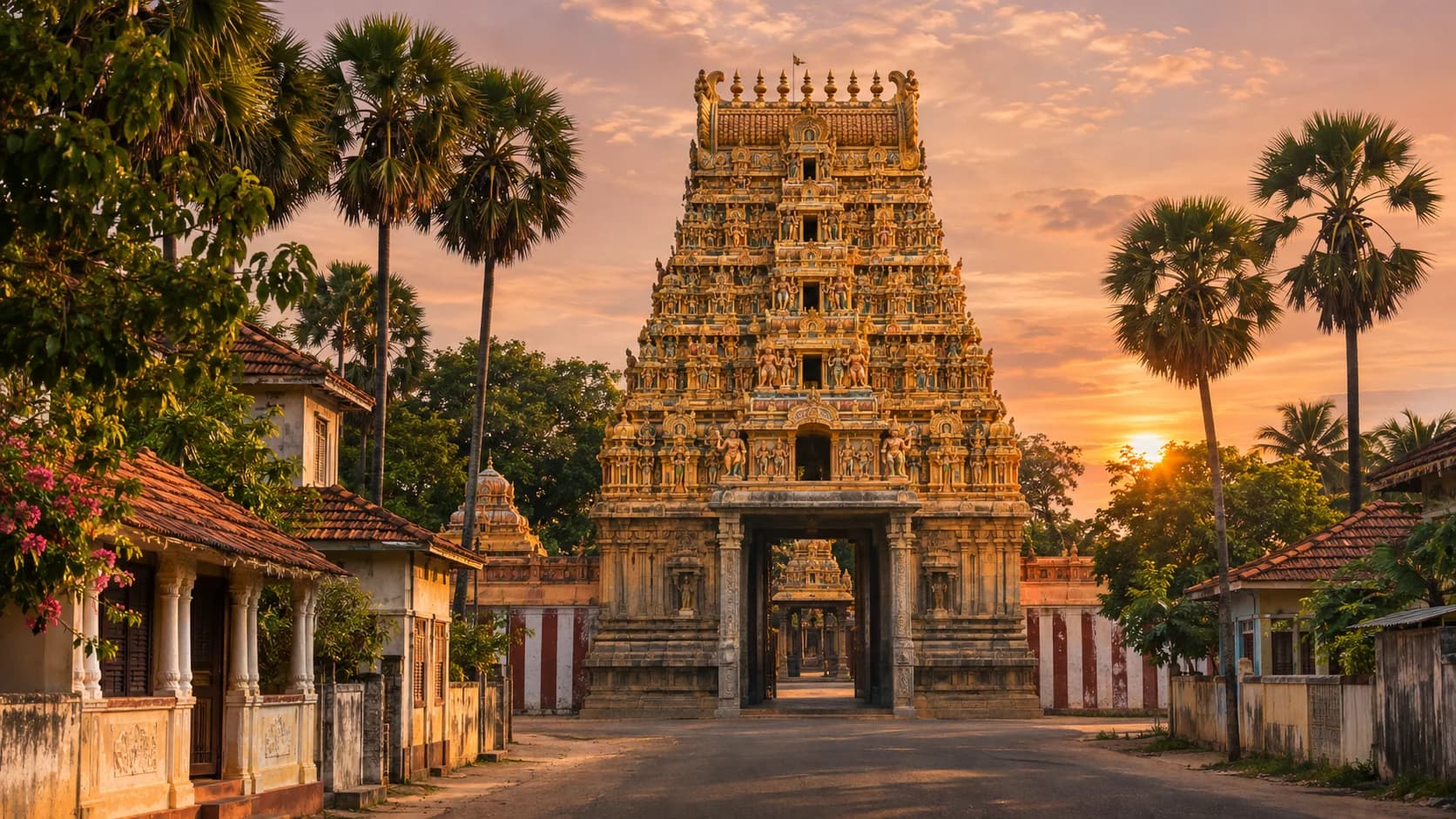
Jaffna travel guide: culture, history and northern Sri Lanka
This guide helps you plan a visit to Jaffna, the cultural heart of northern Sri Lanka. You will learn the best time to go, how to reach the peninsula, what to see and do, which areas suit different travel styles and practical tips for a smooth trip.
Jaffna sits at the northern tip of Sri Lanka, a peninsula shaped by Tamil Hindu culture, colonial history and a resilient community rebuilding after decades of conflict.
Why go
Jaffna offers a distinct cultural experience unlike anywhere else in Sri Lanka, with Hindu temples, colonial forts, remote islands and a cuisine you will not find further south. The city centre blends bustling markets with quiet streets where Dutch and British architecture survives beside colourful kovils. Beyond town, the peninsula stretches to white-sand beaches, shallow lagoons and islands reached by causeway or boat. Travellers come for the history, the food and the slower pace that encourages conversation with locals.
When to go
The best months to visit Jaffna are January to March when rainfall is lowest and temperatures sit around 28 to 32 degrees Celsius. The northeast monsoon brings heavy rain from October to December, which can flood roads and disrupt ferry services to the islands. April to September is hot and dry, with temperatures often above 34 degrees Celsius, making midday exploration uncomfortable. Festival dates shift each year; the Nallur Festival in July or August draws thousands of devotees and visitors, so book transport and accommodation early if you plan to attend.
How to get there
The most direct route is a domestic flight from Colombo to Jaffna International Airport, which takes about one hour. Trains run daily from Colombo Fort to Jaffna, a journey of seven to nine hours depending on the service; the night mail train saves a daylight hour but arrives before dawn. Public and private buses connect Colombo and other major towns to Jaffna, taking eight to ten hours from the capital. If you drive, the A9 highway runs the length of the island; allow nine to ten hours from Colombo with rest stops. Check the Sri Lanka Tourism Promotion Bureau for current transport options and the Department of Immigration and Emigration for visa requirements that vary by nationality.
Getting around
Within Jaffna town, tuk-tuks are the main mode of transport; agree a fare before you set off as meters are rarely used. Bicycles and scooters can be rented from guesthouses for exploring the flat peninsula at your own pace. Local buses serve the main roads to Point Pedro, Kayts and other towns, though schedules are informal and crowds peak at school times. Ferries to islands such as Nainativu and Delft run from Kurikadduwan jetty; timetables change with tides and weather, so confirm the day before at your accommodation or the jetty office. For day trips to multiple sites, hiring a driver with a car or van is the most efficient option.
Things to do
Visit Nallur Kandaswamy Kovil, the region's most important Hindu temple, where daily rituals and the annual festival showcase centuries of devotion. Explore Jaffna Fort, a Dutch-era star fort with ramparts you can walk for views across the lagoon. Browse Jaffna Market for palmyra products, dried fish, spices and the tiny sweet bananas the peninsula is known for. Take the causeway to Kayts Island, then a short ferry to Delft Island, where wild ponies, a baobab tree and coral-stone walls tell a layered history. On Nainativu, Nagapooshani Amman Kovil and the Buddhist Nagadeepa Purana Viharaya sit side by side, a rare example of shared sacred ground. Walk the white sands of Casuarina Beach in Karainagar, where the water stays shallow far out. Taste Jaffna cuisine, crab curry, mutton poriyal, odiyal kool and palmyra jaggery desserts, at family-run eateries. Respect dress codes at all religious sites: cover shoulders and knees, remove shoes and hats, and ask before photographing inside shrines.
Where to stay, by area
Jaffna town centre puts you within walking distance of the fort, market, library and main kovils, with a range of guesthouses, mid-range hotels and a few newer boutique options. Staying near the railway station or bus stand suits travellers arriving late or leaving early on public transport. The coastal road toward Karainagar and Casuarina Beach has simpler guesthouses and homestays with sea breezes and quieter evenings. On Kayts and Delft islands, accommodation is limited to a handful of homestays and basic rooms; book ahead and expect minimal facilities. Point Pedro, at the northern tip, has a few small hotels and guesthouses for those wanting to be near the lighthouse and the point where the Indian Ocean meets the Bay of Bengal.
How long to stay
Three full days let you cover the main town sites, a day trip to Nainativu and Delft, and a beach afternoon at Casuarina. Add a fourth day if you want to cycle the peninsula's quieter lanes, visit the Keerimalai springs and Naguleswaram Kovil, or take a cooking class. Travellers on a tighter circuit often combine Jaffna with Anuradhapura and Trincomalee on a northern loop; see the 7 day Sri Lanka itinerary: culture, hills and coast for one routing. If you plan to include a safari, the Udawalawe vs Yala: choose the best Sri Lanka safari park guide helps you decide which park fits your route.
Practical tips
Carry cash in small denominations; many small shops, tuk-tuks and ferry tickets do not accept cards. ATMs in Jaffna town dispense Sri Lankan rupees (LKR); check with your bank for fees. The Sri Lanka trip cost guide for backpackers, mid-range and comfort outlines daily budgets by travel style. Dress modestly throughout the peninsula, not only at religious sites; lightweight long sleeves and trousers protect from sun and respect local norms. Alcohol is sold in licensed shops and some hotels but not openly in restaurants; public consumption is frowned upon. Power cuts can occur; a power bank is useful. Mobile coverage is good in town and along main roads but patchy on islands; Dialog and Mobitel have the widest reach. For health advice, consult the CDC travel health page for Sri Lanka before departure. The UK Foreign Office travel advice for Sri Lanka provides safety updates relevant to all nationalities. Always ask permission before photographing people, especially at temples and during ceremonies.
Next step
Get the free Sri Lanka travel starter kit for a packing list, budget planner and itinerary templates delivered to your inbox.
Frequently asked questions
Is Jaffna safe for tourists?
Jaffna is generally safe for tourists with normal precautions. The area has been stable since the war ended in 2009, but check current travel advisories from your government before departure.
Do I need a special permit to visit Jaffna or the islands?
No special permit is required for Jaffna or the inhabited islands. Some uninhabited islands or military zones may be restricted; follow local signs and advice.
What is the best way to pay for things in Jaffna?
Cash in Sri Lankan rupees is essential for markets, tuk-tuks, ferries and small eateries. Cards are accepted at larger hotels and some restaurants in town.
Can I visit Jaffna as a day trip from Colombo?
A day trip is not practical due to travel time; the train or drive takes seven to ten hours each way. Plan at least two nights to make the journey worthwhile.
Are there vegetarian and vegan food options in Jaffna?
Yes, Jaffna cuisine is largely plant-based with many naturally vegan dishes such as dosai, idli, vegetable curries and palmyra-based sweets.
Facts in this guide were checked against official sources on the date shown. Rules and prices change, so confirm before you travel.