
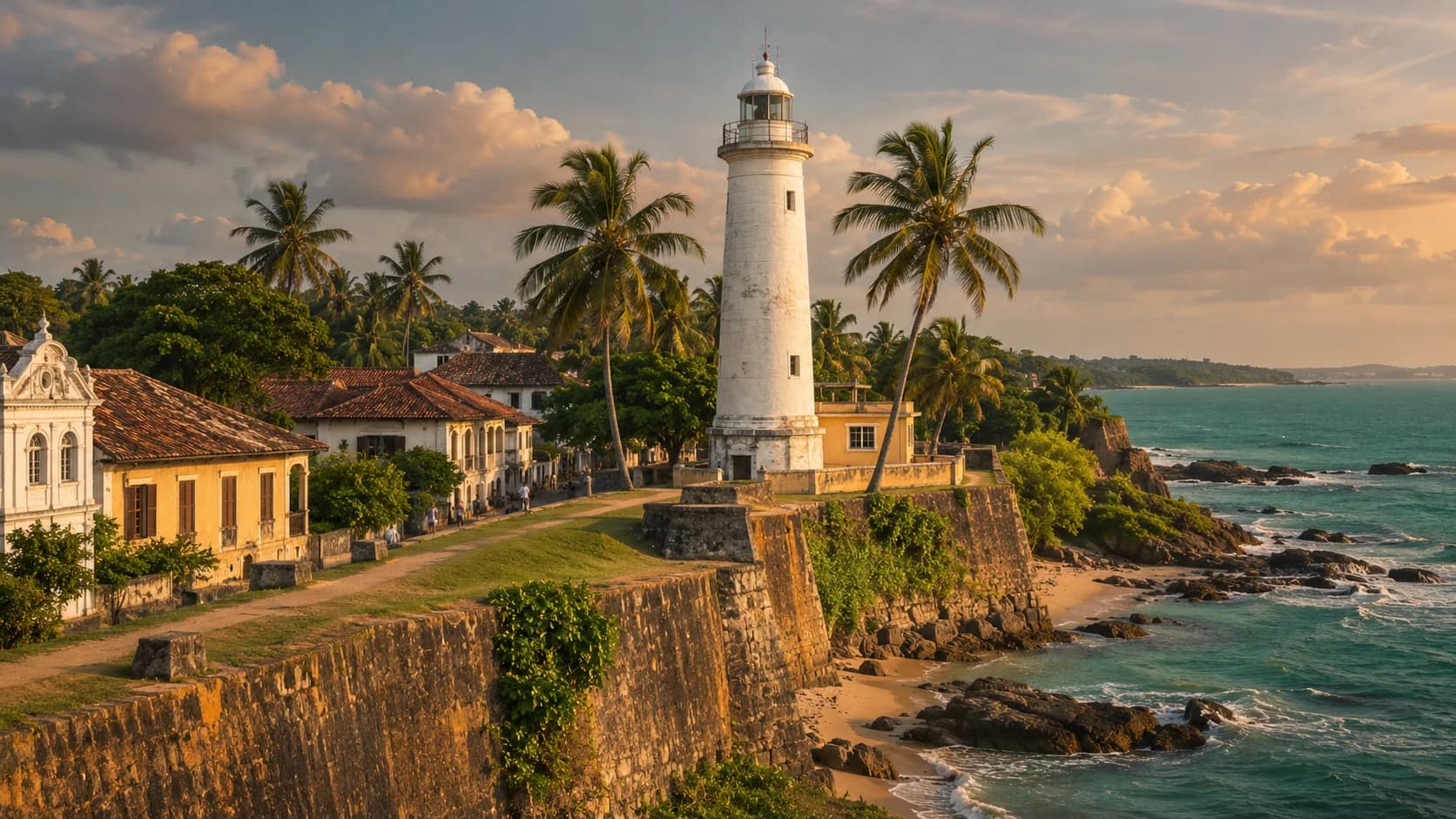
Galle Sri Lanka: your complete guide to the fort city
This guide covers everything you need to plan a visit to Galle, from exploring the UNESCO-listed fort to choosing where to base yourself along the coast. You will find practical details on transport, timing, things to do and local customs.
Galle is a coastal city in the Southern Province of Sri Lanka, best known for its 17th-century Dutch fort that remains a living neighbourhood rather than a museum piece. The fort area sits on a peninsula sheltering a natural harbour, with the newer city spreading inland along the main road and railway line.
Why go
Galle offers a compact mix of colonial architecture, boutique shopping, cafe culture and access to beaches within a walkable area. The fort walls are a draw at sunset when locals and visitors gather on the ramparts. Outside the fort, Unawatuna and nearby bays provide swimming and snorkelling options, while the surrounding district reaches into tea country and rainforest. The city works well as a two-to-three-night stop on a south coast itinerary or as a base for day trips to Hikkaduwa, Mirissa or Sinharaja Forest Reserve.
When to go
The most reliable weather runs from December to March when the northeast monsoon brings dry, sunny days and calm seas on the south coast. April and November are shoulder months with a higher chance of showers but fewer crowds. The southwest monsoon from May to October brings regular rain and rough seas, though mornings can still be clear. Temperatures stay between 27 and 31 degrees Celsius year round. Check the Sri Lanka Tourism Promotion Bureau for current seasonal advice.
How to get there
The coastal railway line connects Galle to Colombo Fort in about two and a half to three hours depending on the service. Express trains are faster but require seat reservations; slower commuter trains run frequently and cost less. Buses from Colombo's Maharagama or Bastian Mawatha terminals take a similar time and run throughout the day. The Southern Expressway (E01) cuts the drive from Colombo to roughly two hours by car or taxi. From Bandaranaike International Airport, allow three to three and a half hours by road. Visa requirements vary by nationality; most visitors need an Electronic Travel Authorization obtained via the official ETA website before arrival or on arrival at the airport.
Getting around
The fort area is flat and walkable with narrow streets that suit pedestrians and bicycles. Tuk-tuks are plentiful for trips between the fort, Unawatuna, Jungle Beach and the train station; agree a fare before setting off. Local buses run along the A2 coastal road linking Galle town, Unawatuna, Thalpe and further west to Hikkaduwa. Bicycle hire is common inside the fort and along the coast road. For day trips to Sinharaja or tea estates inland, a hired car with driver is the most practical option.
Things to do
Walk the full circuit of the fort ramparts at sunset for views over the Indian Ocean and the cricket ground. Inside the walls, the Dutch Reformed Church, the Old Gate with its British coat of arms, the Maritime Archaeology Museum and the clock tower are open during daytime hours. The National Maritime Museum near the Old Gate displays artefacts from shipwrecks along the coast. The fort's side streets hold art galleries, jewellery workshops, spice shops and cafes in restored colonial buildings. Outside the fort, Unawatuna Bay offers a curved beach with swimming conditions that vary by season; Jungle Beach and Roomassala Hill are reached by a short tuk-tuk ride and a walk through forest. The Japanese Peace Pagoda on Roomassala provides panoramic views. Whale watching boats operate from Mirissa harbour, about 40 minutes west by road, typically from November to April; sightings are not guaranteed. For wildlife, Sinharaja Forest Reserve is a UNESCO biosphere reserve about two hours inland by road; entry requires a guide arranged at the park entrance. The Department of Wildlife Conservation manages permits and guide allocations. Koggala Lake, east of Galle, offers boat trips among mangrove islets and a visit to the Martin Wickramasinghe Folk Museum. Respect dress codes at religious sites: shoulders and knees covered, shoes removed at Buddhist and Hindu temples. Never pose with or climb on Buddha images.
Where to stay, by area
Inside the fort puts you within the walls among boutique guesthouses, converted merchant houses and a handful of higher-end hotels. You are steps from the ramparts, museums and evening dining. Nights are quieter after day visitors leave. Unawatuna stretches along a broad bay with a range of guesthouses, mid-range hotels and beachfront properties. The beach shelves gently in places but currents can be strong outside the protected swimming area. Thalpe and Koggala to the east offer a lower-density coastline with villas, smaller hotels and easier access to Koggala Lake and the expressway entrance. Galle town (New Town) outside the fort has business hotels and budget lodges near the train and bus stations, practical for early departures or late arrivals. Hikkaduwa to the north suits travellers wanting a livelier beach scene with more nightlife and dive centres.
How long to stay
Two nights allows a full day for the fort, a morning at Unawatuna or Jungle Beach and an evening on the ramparts. Three nights adds a day trip to Sinharaja, a whale watching morning from Mirissa or a relaxed pace with time for shopping and cafes. One night is tight but feasible if you arrive early and leave late, focusing only on the fort.
Practical tips
Carry cash in small denominations for tuk-tuks, market purchases and entry fees; card acceptance is growing but not universal. ATMs are available in Galle town and inside the fort. Power sockets are type D, M and G; a universal adapter covers all. Tap water is not recommended for drinking; use filtered or bottled water. Sunscreen and a hat are essential for the exposed ramparts. Mosquito repellent is useful at dawn and dusk. When visiting temples, carry a light scarf or sarong to cover shoulders and legs. Photography of military installations, airports and some government buildings is prohibited. The UK Foreign Office travel advice and CDC travel health pages carry current safety and health guidance for Sri Lanka. Check the Department of Immigration and Emigration site for visa extensions if you plan to stay beyond the initial authorisation.
Next step
Get the free Sri Lanka travel starter kit for a printable packing list, budget planner and a one-page cheat sheet covering visas, transport apps and cultural dos and don'ts.
Frequently asked questions
Is Galle Fort worth visiting?
Yes, Galle Fort is a UNESCO World Heritage site with intact ramparts, colonial buildings, museums, shops and cafes all in a walkable peninsula. It remains a living neighbourhood rather than a static monument.
How do I get from Colombo to Galle?
Take the coastal train from Colombo Fort (two and a half to three hours), a bus from Maharagama or Bastian Mawatha, or drive the Southern Expressway in about two hours.
What is the best time to visit Galle?
December to March offers dry weather and calm seas. April and November are shoulder months with occasional rain. May to October brings the southwest monsoon with regular showers and rough seas.
Can I swim at Unawatuna Beach?
Swimming is possible in the protected bay area but conditions vary by season; currents can be strong outside the sheltered zone. Always observe local advice and flag warnings.
Do I need a visa for Sri Lanka?
Most nationalities require an Electronic Travel Authorization obtained via the official ETA website before arrival or on arrival. Requirements vary by nationality so check the official source for your passport.
Facts in this guide were checked against official sources on the date shown. Rules and prices change, so confirm before you travel.